
DIY Patio Cover: Right Choice for Your Pool Cage?
A practical look at what homeowners can safely handle on a patio enclosure and where aluminum pool cage work calls for licensed experience.
- Free Written Estimate
- Fast Scheduling
- Built for Florida Weather
- Licensed & Insured
- BBB A+ Rated
- 150,000+ Customers Served
- 283+ 5-Star Reviews
Request Your Free Estimate
Not sure if your project is a DIY job? Get a free written estimate first.
- Free No-Obligation Estimate
- Fast Response Times
- No Pressure Consultation

A DIY patio cover can work for simple, ground-level additions like a freestanding shade structure, but most aluminum pool cages and screen enclosures in Florida involve structural framing, fasteners rated for wind load, and screen tensioning that go beyond typical weekend projects.
Whether DIY makes sense depends on what you’re actually changing. Rescreening a few panels on a screened in porch is different from repairing a pool enclosure’s frame after storm damage, repainting weathered aluminum, or adding a new patio screen enclosure that ties into your home’s roofline and needs to meet Manatee County wind and permitting codes.
What Determines If DIY Works
Scope matters more than enthusiasm. Replacing torn screen panels on a screened in porch is a different job than repainting an entire pool cage or repairing bent aluminum framing. Structural work on patio enclosures, especially anything touching load-bearing beams or footers, often falls outside what a homeowner should handle without experience in aluminum fabrication.
Cage height changes the calculus quickly. A single-story screen enclosure over a lanai is manageable with a sturdy ladder and basic safety sense, but two-story pool enclosures common in Bradenton and Sarasota require lift equipment or extension ladders rated for the height, plus someone comfortable working above a pool deck for hours at a time.
Permits and HOA rules add another layer. Many Bradenton and Parrish communities require architectural approval before repainting a cage a different color, and some municipalities require permits for structural repairs to patio enclosures or aluminum pergolas. Checking with the HOA and the Manatee County building department before starting avoids rework or fines later.
- Simple rescreening: realistic for most homeowners
- Full repaint or color change: check HOA approval first
- Structural repairs: usually requires a permit
- Two-story cages: equipment and safety risk increase sharply
What the Work Actually Involves

Pressure washing comes first, and it has to be thorough. Aluminum frames develop oxidation, a chalky white residue, and mildew streaks from salt air and humidity. Paint applied over unaddressed oxidation peels within months, so the surface needs scrubbing, rinsing, and full drying before any primer goes on, which alone can take a full day depending on cage size.
Screen replacement requires matching mesh gauge to the existing panels, typically 18×14 fiberglass or a heavier pet-resistant weave, then cutting it to size and securing it with a spline roller into the existing channel. Spline tools are inexpensive, but keeping tension even across a large panel without wrinkles takes practice most people only get after a few attempts.
Southwest Florida weather limits the work window. Paint needs a stretch of low humidity and no rain for proper curing, which during Bradenton’s summer wet season can mean waiting for dry mornings or scheduling around afternoon storms. Fall and winter generally offer more reliable curing conditions for both paint and screen adhesives.
Common DIY Mistakes to Avoid
Interior or standard exterior wall paint does not hold up on an aluminum pool cage. Aluminum needs a bonding primer formulated for metal, followed by a coating rated for UV and humidity exposure. Skipping that step leads to peeling within a season, especially on frames facing west sun or sitting close to the pool deck.
Rescreening mistakes show up fast too. Pulling screen too tight can bow thin aluminum spline channels or warp the frame itself, while leaving it too loose invites sagging and early tearing. Homeowners near Sarasota and other coastal stretches also tend to miss early rust at panel joints and fastener points, where salt air accelerates corrosion well before paint failure is visible.
- Using the wrong primer or skipping primer on bare aluminum
- Over-tightening screen material, causing frame bowing or spline damage
- Missing rust at joints, screws, and base plates in salt air areas
- Not checking HOA or community rules on screen color and mesh type before buying materials
- Working on tall pool cage sections without proper ladder stabilization or a second person
When to Call a Pool Cage Professional
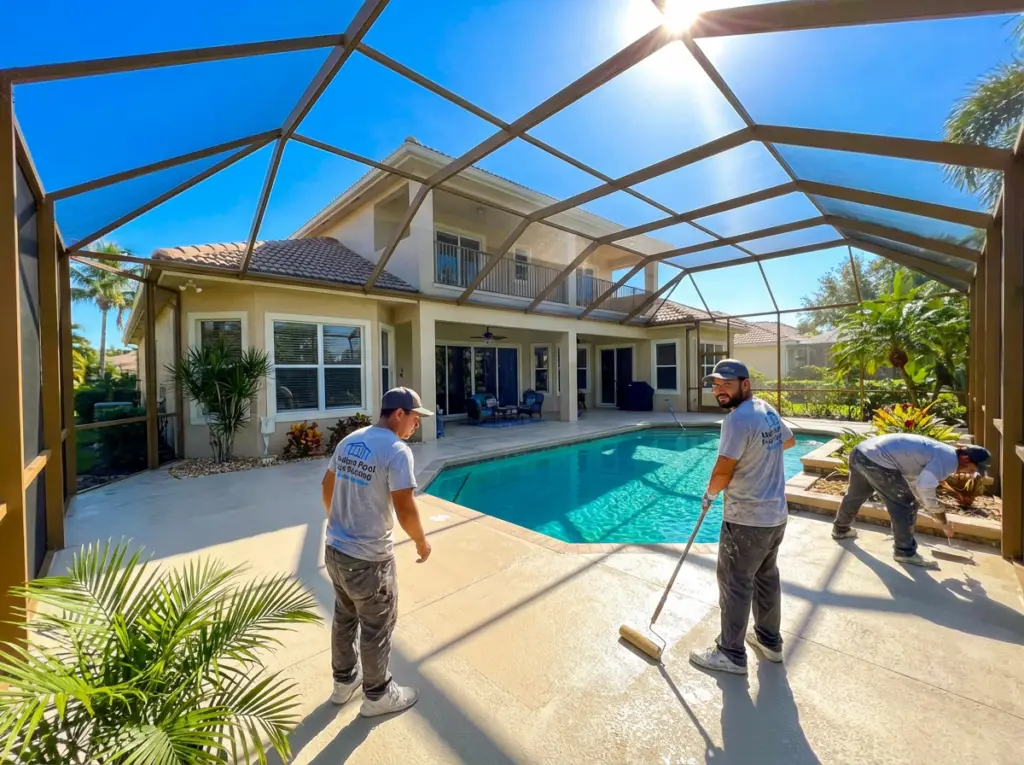
Some conditions point toward professional work rather than a weekend project. Visible rust blooming through paint, bent or bowed aluminum ribs, and sections that flex more than they should usually mean the frame has deteriorated past a simple touch-up. These issues tend to appear first in corner posts and roof panels on older enclosures around Bradenton and Parrish.
Larger projects also change the calculation. A full screened in patio repaint, a sunroom addition tied into the cage, or any repair following storm or hurricane damage often involves permits, engineering sign-off, or manufacturer specifications that a DIY approach can unintentionally void. HOA communities frequently have specific screen color and frame finish requirements as well, and getting that wrong can mean redoing the work.
A free written estimate is a useful step before deciding either way. It lays out the actual condition of the frame and screen, what code or HOA items apply, and what the scope would involve, so the decision between DIY and hiring out is based on specifics rather than guesswork.
How the work is done, step by step
- Inspect the full frame for rust, corrosion, and structural bowing before any cleaning begins
- Pressure wash the aluminum to remove oxidation, mildew, and chalking residue
- Spot-treat rust and apply a metal-bonding primer to affected areas
- Apply a UV-rated exterior coating formulated for aluminum pool cages
- Remove and replace damaged screen panels, matching mesh type to HOA or community specs
- Final walk-through to check fastener tightness, screen tension, and finish consistency
Most pool cage painting and rescreening projects run from two to five days depending on enclosure size and weather conditions.
Frequently asked questions
Can I rescreen my own pool cage in Bradenton?
It is possible on a single-story, easy-access enclosure if you have the right spline tools and patience, but working above a pool or on a second-story lanai gets risky fast. Panels on curved or vaulted cages also take practice to pull tight without ripples, so many homeowners hire this part out even when they handle smaller screen porch repairs themselves.
Is it cheaper to paint an aluminum pool enclosure myself?
DIY saves on labor but rarely on materials, since the right etching primer and exterior-grade acrylic for aluminum cost close to what a crew pays at the same suppliers. Mistakes like skipping rust treatment or spraying in high humidity often mean repainting within a year or two, which erases the initial savings.
What paint works on aluminum pool cages in Florida?
A 100% acrylic exterior paint formulated for metal, applied over a bonding or etching primer, holds up best against Gulf Coast sun and salt air. Oil-based paints tend to chalk and peel faster on aluminum, so most Bradenton and Sarasota cages are finished with acrylic systems rated for coastal exposure.
Do I need a permit for a DIY patio cover or screen enclosure?
Rescreening existing panels or repainting a cage typically does not require a permit in Manatee County, but structural work on the frame, footers, or a new sunroom addition usually does. HOA or deed-restricted communities in Bradenton and Parrish often have their own approval process on top of county rules, so it is worth checking both before starting.
How do I know if my pool cage frame needs professional repair?
Look for loose or wobbling panels, screws pulling out of corroded aluminum, bent beams from storm wind, or rust streaks at the base posts where water sits. If a section flexes noticeably when pushed or screens keep tearing out near the same spot, the frame itself likely needs attention, not just new screen.
What tools do I need to rescreen a patio enclosure myself?
Basic rescreening calls for a spline roller, flathead screwdriver or spline removal tool, utility knife, replacement screen, and the correct size spline for your track. For larger screen rooms or pool enclosures with tall panels, a sturdy ladder and a second set of hands make the job far more manageable.
Nearby Areas We Also Serve
Modern Pool Cage Painting serves homeowners throughout this part of the Gulf Coast, from established neighborhoods to newer communities nearby. Bradenton, Sarasota, Tampa, Naples, Fort Myers and Cape Coral.
Statewide details, colors and the full process are on our main pool cage painting page.
Recent Work


Get a written estimate for your pool cage
Send a few photos of the enclosure along with the property address, and you will receive a written estimate back with no cost or obligation. For questions before then, call or text (941) 320-2858.
Last reviewed: October 18, 2026