
Pressure Washing in Bradenton, FL
We clean house exteriors, driveways, pool decks, roofs and pool cages across Bradenton, using the right pressure and cleaning solution for each surface.
- Free Written Estimate
- Fast Scheduling
- Built for Florida Weather
- Licensed & Insured
- BBB A+ Rated
- 150,000+ Customers Served
- 283+ 5-Star Reviews
Request Your Free Estimate
Request a free written estimate for your Bradenton property below.
- Free No-Obligation Estimate
- Fast Response Times
- No Pressure Consultation
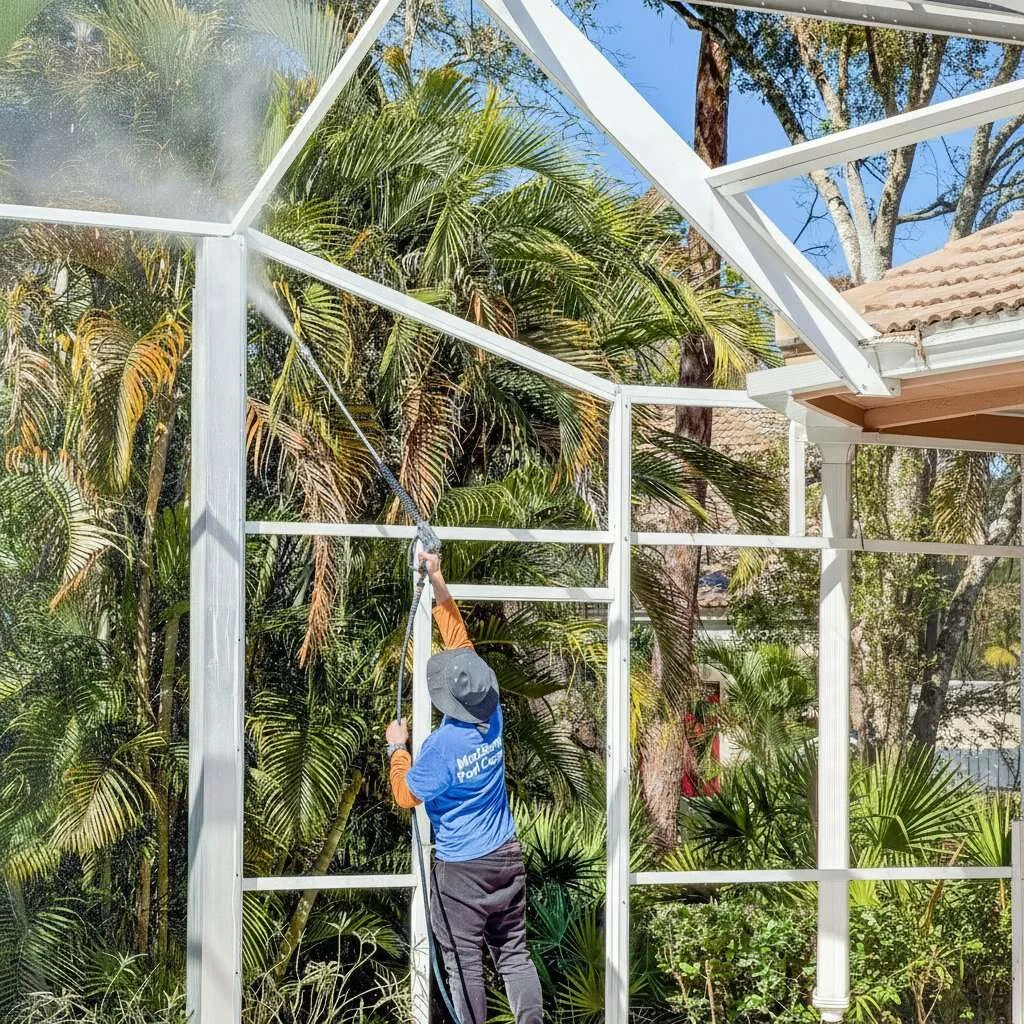
Bradenton sits on the Manatee River near the Gulf, and that proximity to salt air, humidity and heavy summer rain leaves a mark on every exterior surface. Pool decks develop algae film, driveways pick up tire marks and organic staining, roofs grow black streaks, and pool cage screens and frames collect dust, pollen and salt residue that plain rain never fully rinses away.
We pressure wash and soft wash homes throughout Bradenton, from older neighborhoods near downtown and the river to newer communities toward Lakewood Ranch, as well as properties in Palmetto, Ellenton, Parrish and Cortez. Each surface gets matched equipment and cleaner: high pressure for concrete, low-pressure soft washing for roofs, siding and screened enclosures where fragile aluminum and mesh require a gentler approach.
Salt Air and Humidity in Bradenton
Neighborhoods closer to the river and the Gulf, from Cortez and Bradenton Beach to Anna Maria, see faster buildup of salt film on screen frames and pool cages than inland areas like Lakewood Ranch or Myakka City. Salt residue holds moisture against aluminum and screen mesh, which speeds up oxidation and gives algae a foothold even on surfaces that get regular rain.
Manatee County’s warm, humid stretch from late spring through early fall keeps shaded lanais, north-facing walls and pool decks damp for hours after a storm passes. That extra dwell time lets black mold and green algae establish themselves in grout lines, screen corners and under pool cage kickplates, areas that often get missed by a garden hose or a quick rinse.
Left alone, these deposits do more than look bad. Algae on pool decks becomes a slip hazard, mildew etches into stucco and pavers over time, and salt buildup on cage frames contributes to the corrosion we see when we rescreen or restore enclosures. Regular washing on a schedule suited to your property’s exposure slows all of this down.
How We Wash Each Surface
We start by walking the property and identifying what each surface is made of and how it is holding up: painted stucco, pavers, stamped concrete, shingle or tile roofing, screen mesh, and powder-coated or mill-finish aluminum framing. That assessment determines pressure level, nozzle choice and whether a surface needs a soft wash with a cleaning solution instead of direct high pressure.
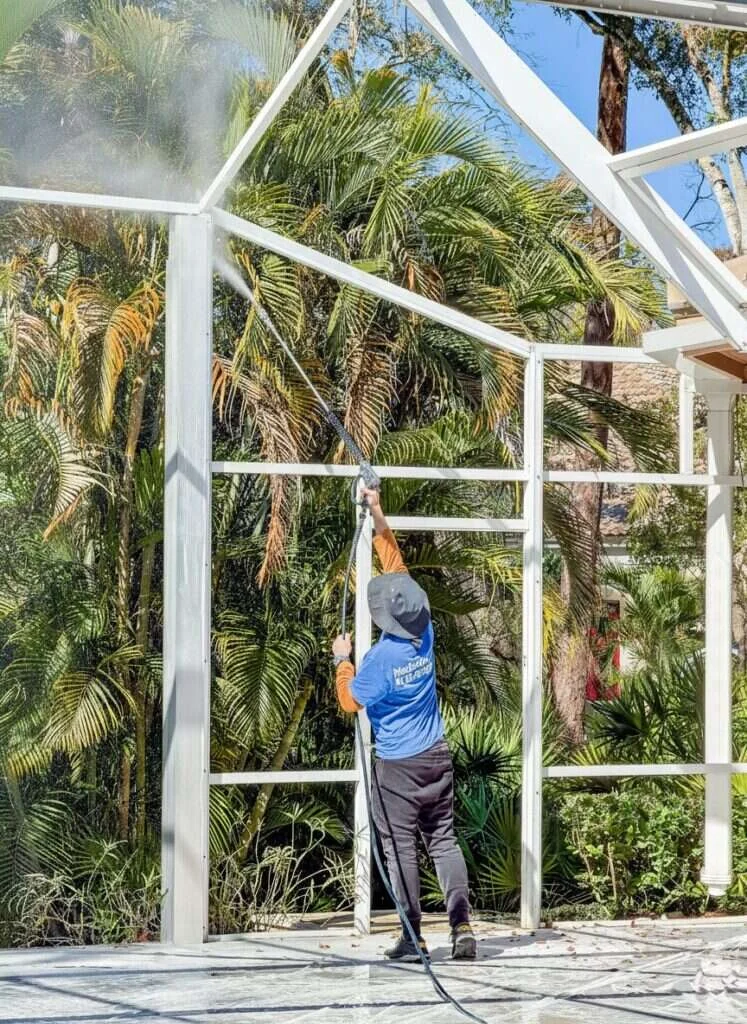
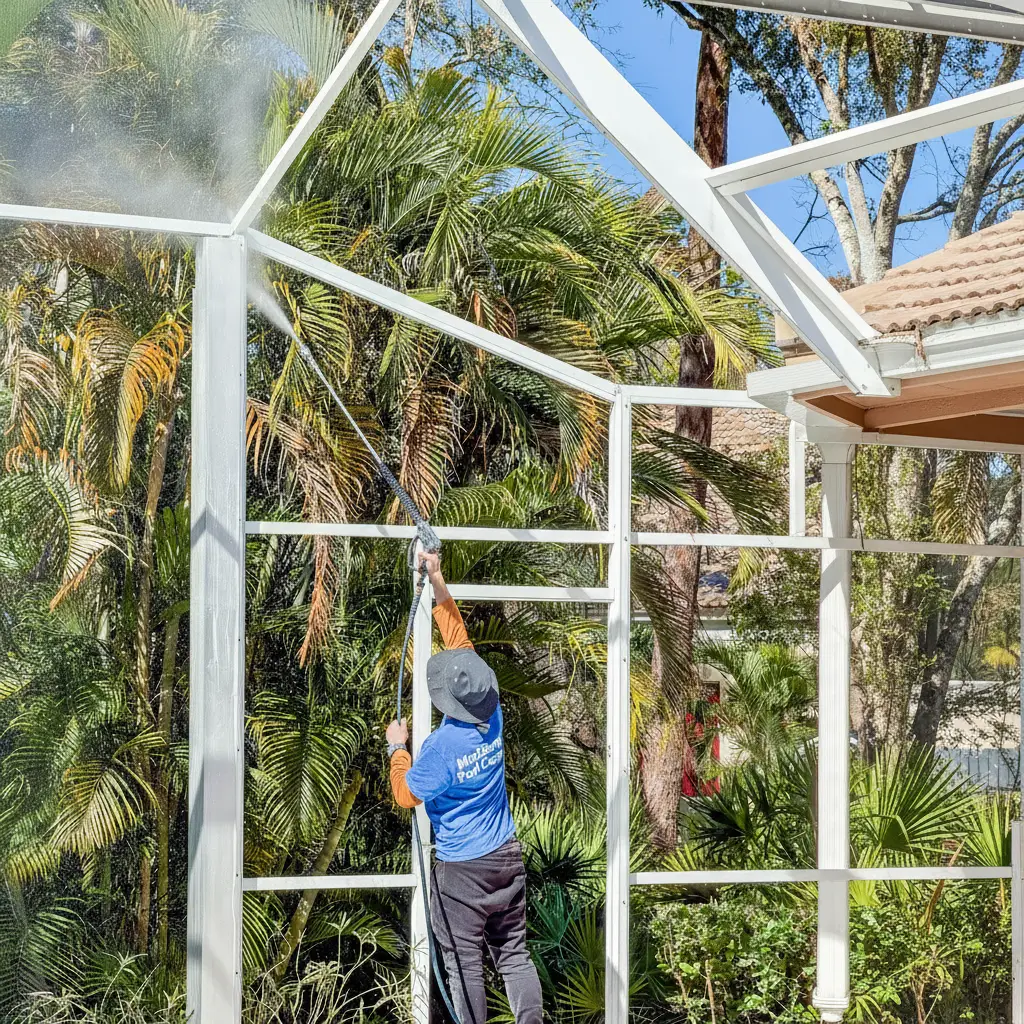
Pool cage screens and roofing always get a soft wash: low pressure combined with an appropriate cleaner to lift algae and dirt without tearing mesh, loosening panels or stripping roof granules. Driveways, walkways and pool decks can handle higher pressure, but we still pre-treat oil stains, rust marks and organic buildup first so the washing itself goes faster and more evenly.
Work proceeds top to bottom: roof and upper screen panels first, then siding and cage framing, then decks, driveways and walkways last, so runoff from higher surfaces gets rinsed away rather than redeposited on clean areas below. We finish with a full rinse and check corners, frame tracks and drainage channels where residue tends to collect.
- Surface identification: stucco, pavers, concrete, roofing material, screen and frame type
- Soft washing for screens, roofs and painted siding; higher pressure where the surface allows it
- Pre-treatment for algae, rust, tire marks and organic staining before washing begins
- Top-to-bottom sequence to prevent recontamination of already-cleaned surfaces
- Final rinse with attention to frame tracks, corners and low drainage points
Scheduling, Access and HOA Rules
Most house and pool cage washing in Bradenton takes half a day to a full day, depending on square footage and how much hand-scrubbing the screens or pavers need. We ask about gate codes, side-yard access and whether pets will be out, since equipment and hoses need a clear path around the pool cage and lanai without someone having to monitor a gate all day.
Florida afternoon storms are part of scheduling here. We start early when possible and plan around the typical midday buildup, especially in summer, so surfaces have time to dry and any sealant or treatment can set before rain arrives. If a storm moves in, we pause and finish once it clears rather than rushing a surface.
Many Bradenton neighborhoods, including communities near Lakewood Ranch, have HOA rules about washing schedules, water runoff or approved vendors for shared pool enclosures. We ask for a copy of relevant guidelines before starting and keep runoff contained near landscaping, storm drains and shared walkways so the work stays within community standards.
Why the Wrong Pressure Causes Damage
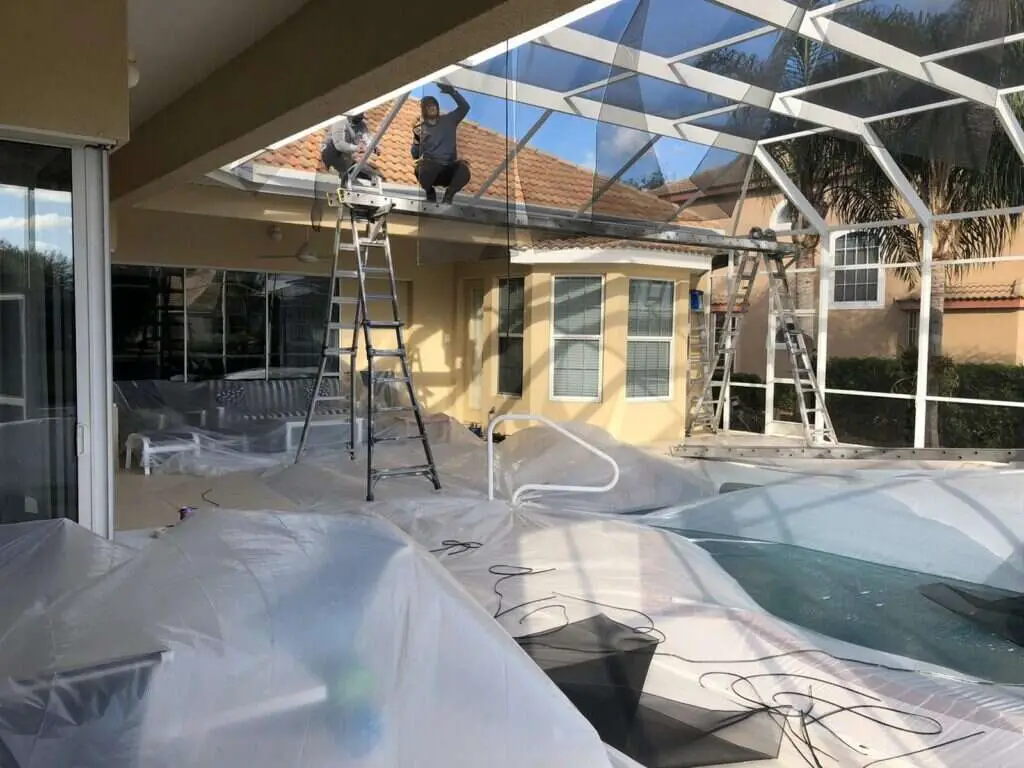
Pool cage screening is thin and tears easily under a direct pressure washer stream, and aluminum frames can pit or streak if the wrong nozzle or chemical is used too close. We soft wash screens and frames with lower pressure and the right cleaner, which lifts dirt and mildew without stressing the mesh or loosening screw spline.
Pavers, concrete pool decks, stucco and shingles each need their own pressure range and dwell time for cleaners. Too much pressure on pavers can blow out the joint sand and shift them; too much on shingles can strip granules and shorten roof life. Matching pressure and method to the material is what keeps a cleaning job from turning into a repair job.
- Screens and cage frames: low-pressure soft wash, no direct blasting
- Pavers and concrete: moderate pressure, joint sand checked and refilled after washing
- Stucco and siding: controlled pressure with surfactant to lift mildew without forcing water behind walls
- Shingle roofs: low-pressure or soft wash chemical treatment, never a direct high-pressure stream
Process and Timeline
- Walk the property to identify surface materials and current condition
- Confirm gate access, water source, HOA guidelines and any pets or furniture that need to be moved
- Select pressure levels and cleaning solutions appropriate to each surface, from screens to pavers to roofing
- Wash in sections, working around the pool cage, deck and walkways in a logical order
- Rinse thoroughly and check paver joints, screens and frames for any issues uncovered during cleaning
- Walk the finished property with the homeowner before closing out the job
Most residential pressure washing jobs in Bradenton are completed in four to eight hours, with larger properties or heavier buildup sometimes extending into a second day.
Bradenton Pressure Washing FAQ
Can pressure washing damage my pool cage screens or aluminum frame?
Full-pressure washing can tear screen mesh or strip the panel coating from aluminum, so cages are soft washed with low pressure and a cleaning solution rather than blasted like a driveway. The frame and screen spline are checked first for brittleness or loose fasteners, since older screens hold less pressure than new ones.
How often should a pool deck or lanai be pressure washed in Bradenton's climate?
Most homeowners here need a deck and lanai cleaning about once a year, sometimes closer to every eight to ten months on shaded or waterfront lots where humidity and tree debris speed up algae growth. Decks under heavy tree cover near canopied neighborhoods or close to the water tend to need it more often than open, sun-exposed yards.
Do you use the same pressure on roof shingles as on driveways?
No. Roof shingles and tile are soft washed at low pressure with a cleaning solution to lift algae and black streaks without lifting granules or breaking tile, while concrete driveways and walkways can take higher pressure to remove ground-in dirt and rust stains.
Will pressure washing remove the black streaks and algae on my screen enclosure?
Yes, in most cases. The dark streaking on screens and aluminum is usually algae and airborne mold common in Bradenton's humidity and salt air, and a soft wash with the right cleaner removes it without damaging the mesh, though heavily oxidized or very old screens may still show faint staining afterward.
Do I need to be home during the service, and how do you access a locked pool cage?
You do not need to be home as long as there is access to the pool area, gate, or lanai; many Bradenton homeowners leave a gate code or arrange access ahead of time. If the cage is fully locked with no outside access point, a brief walkthrough beforehand helps confirm how the crew will reach it.
Does my HOA in Bradenton require approval before exterior pressure washing?
Some Bradenton communities, particularly in deed-restricted neighborhoods and parts of Lakewood Ranch, do require a notice or approval form before exterior cleaning work, while many standalone homes have no such requirement. Checking your HOA's exterior maintenance guidelines beforehand avoids delays, and we can work around any required notice period.
More Pool Cage Services in Bradenton
Beyond pressure washing, the same crews handle pool cage rescreening, pool cage restoration, and pool cage painting for homeowners throughout Bradenton. Pool Cage Rescreening, Pool Cage Restoration and Pool Cage Painting.
Nearby Areas We Also Serve
Crews working in Bradenton also take on pressure washing projects in nearby Parrish, Palmetto, Ellenton, Cortez, Lakewood Ranch, Bradenton Beach, Myakka City, and Anna Maria. Sarasota, Tampa and Cape Coral.
Statewide details, colors and the full process are on our main pressure washing page.
Recent Work

Request a Bradenton Estimate
Send a few photos of the driveway, deck, roof, or pool cage along with the Bradenton address, and we will reply with a written estimate based on the surfaces and access involved. For questions before then, call (941) 320-2858.
Last reviewed: October 27, 2026