
Screened In Porch Ideas for Florida Pool Cages
Practical ideas for refreshing a screened in porch or pool enclosure, drawn from how aluminum cages actually age in Gulf Coast weather.
- Free Written Estimate
- Fast Scheduling
- Built for Florida Weather
- Licensed & Insured
- BBB A+ Rated
- 150,000+ Customers Served
- 283+ 5-Star Reviews
Request Your Free Estimate
Request a free written estimate and get ideas specific to your cage.
- Free No-Obligation Estimate
- Fast Response Times
- No Pressure Consultation
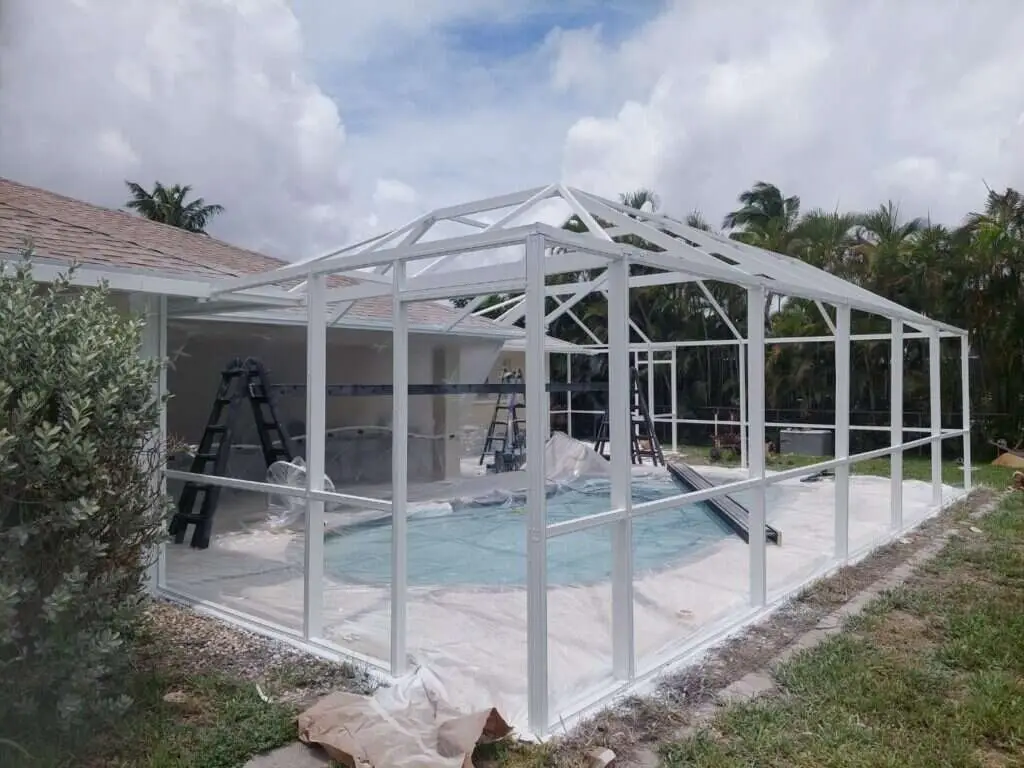
The best screened in porch ideas for Florida start with what the structure can handle, not just what looks good in a photo. Paint color, screen density, and panel layout all have to work with aluminum framing, salt air, and summer heat before they work for style.
What fits one home may not fit the next, because cage age, HOA rules, sun exposure, and whether the structure covers a pool or a patio all change the right answer. A screen room facing west in Parrish has different needs than a shaded lanai in Sarasota, so ideas work best as a starting point for a conversation about your specific enclosure.
What Shapes a Good Screened Porch Idea
Sun exposure determines more than comfort. A west-facing lanai in Bradenton takes direct afternoon heat most of the year, which affects screen choice and how often paint will need recoating. A shaded, east-facing enclosure holds color longer and tolerates denser mesh without trapping heat, so the same design idea can perform differently depending on orientation.
Whether the structure covers a pool or a patio changes the math. Pool enclosures deal with splashed water, chlorine residue, and higher humidity at the base of the frame, which accelerates corrosion near footers. A screened in porch over a dry patio ages more evenly, so frame repainting and screen replacement can often be stretched longer between services.
HOA and deed-restricted communities around Bradenton and Parrish frequently limit cage colors to a short approved list, usually white, bronze, or a matched trim shade. Before picking a finish, it is worth checking the community handbook or asking the HOA office directly, since repainting outside approved colors can require redoing the work at the owner’s expense.
- Frame age and oxidation level limit which paint systems will adhere properly
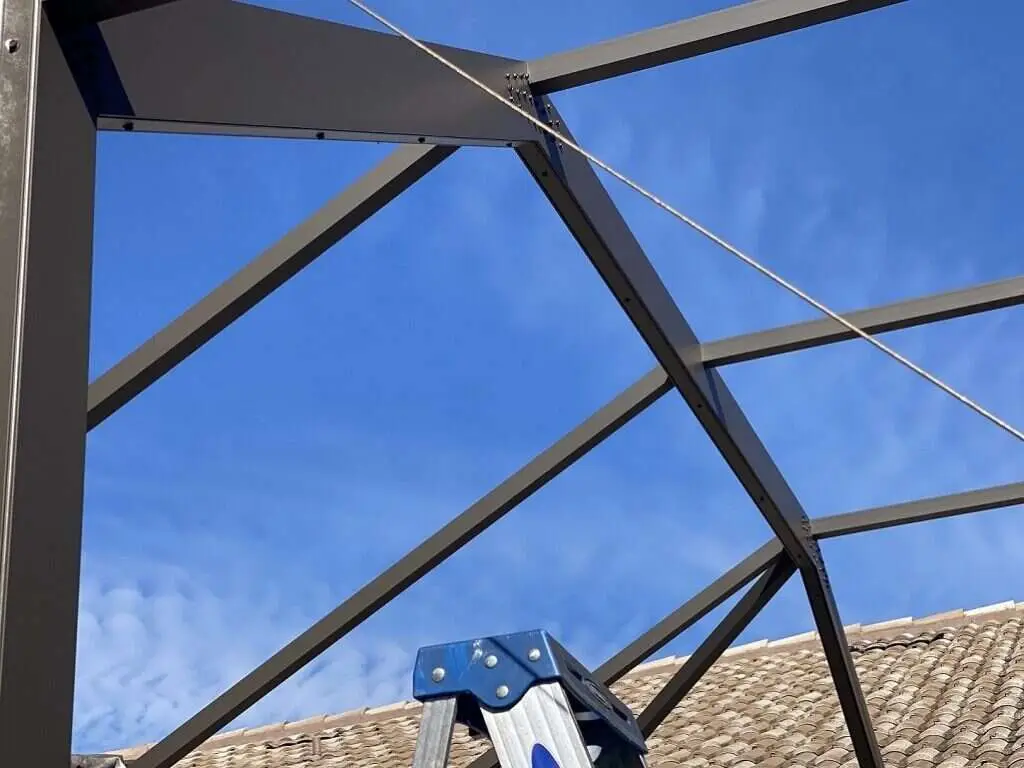
- Pool enclosures need corrosion checks at footers and screws before repainting
- Sun-facing panels may need solar screen instead of standard mesh
- HOA color lists should be confirmed in writing before any paint order
Updates That Change the Look
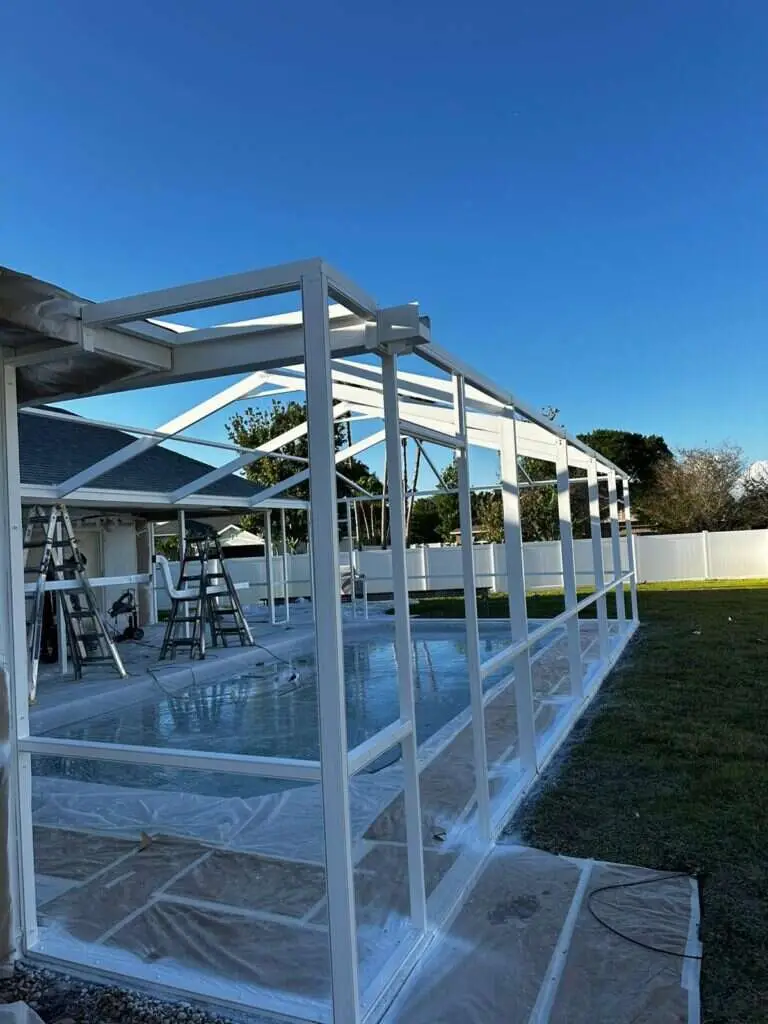
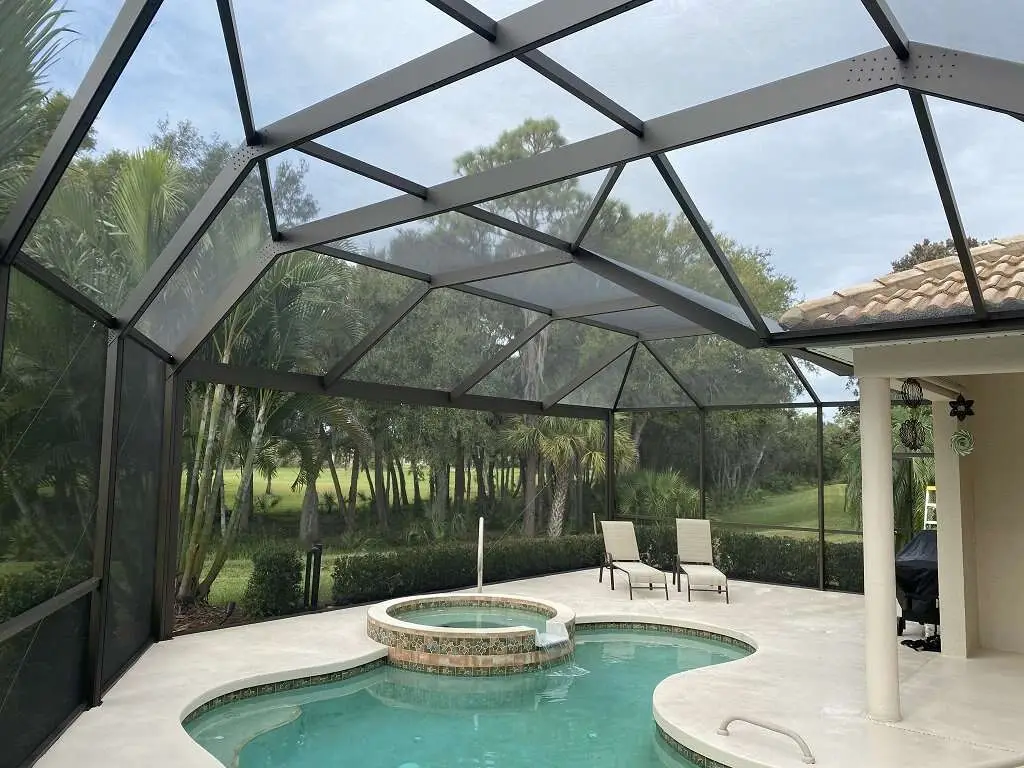
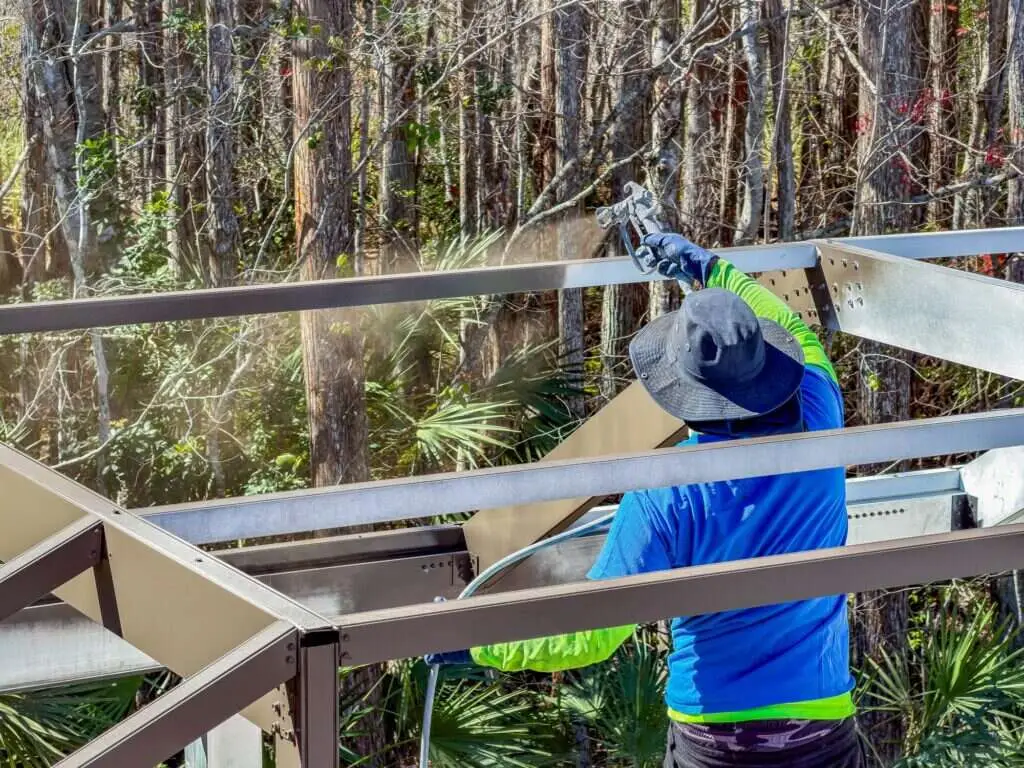
Repainting an aluminum pool cage starts with pressure washing to remove chalking oxidation and salt residue, followed by spot-sanding corroded joints and masking screen panels. A full repaint typically runs two to four days depending on cage size and weather windows, since coastal humidity and rain in Sarasota and Bradenton can delay drying between coats.
Screen mesh options change both the view and the function. Standard fiberglass mesh is the common default, no-see-um mesh blocks smaller insects but reduces airflow slightly, and solar screen cuts glare and heat on west-facing patio enclosures. Rescreening a full cage generally takes one to two days, depending on panel count and door hardware.
Reconfiguring doors or removing a panel section to open sightlines toward the pool is possible on most aluminum frames, but it requires checking that the remaining structure still meets bracing requirements. This kind of layout change is usually done alongside repainting or rescreening, since the frame is already exposed and accessible.
Common Mistakes When Planning Changes
Picking a paint color before checking with the HOA is one of the most common setbacks we see in Bradenton communities. Many associations restrict cage colors to a narrow approved palette, sometimes requiring a sample submission weeks in advance. Starting the project before approval often means redoing work or settling for a shade nobody wanted.
Rescreening a patio enclosure without first inspecting the frame is another frequent misstep. New screen stretched over bent, corroded, or loose fasteners looks fine for a season, then sags or tears early. The frame condition should always be assessed before screen material is ordered, especially on cages older than fifteen years near the coast.
Homeowners sometimes add a aluminum pergola section or modify an existing patio screen enclosure without checking how it ties into the original structure. New fasteners drilled into old aluminum can stress panels that were never designed for the added load, and it can void whatever warranty covered the prior screen or paint work.
- Confirm HOA color approval in writing before ordering paint
- Have the frame inspected before committing to a full rescreen
- Ask how structural changes affect existing warranties before work begins
DIY Touch-Ups vs. Calling a Pro
A homeowner can reasonably handle small jobs: patching a single torn screen panel, rinsing pollen and salt film off aluminum with a garden hose, or tightening a loose screen spline. These tasks need no special tools and carry little risk if done carefully on a stable ladder.
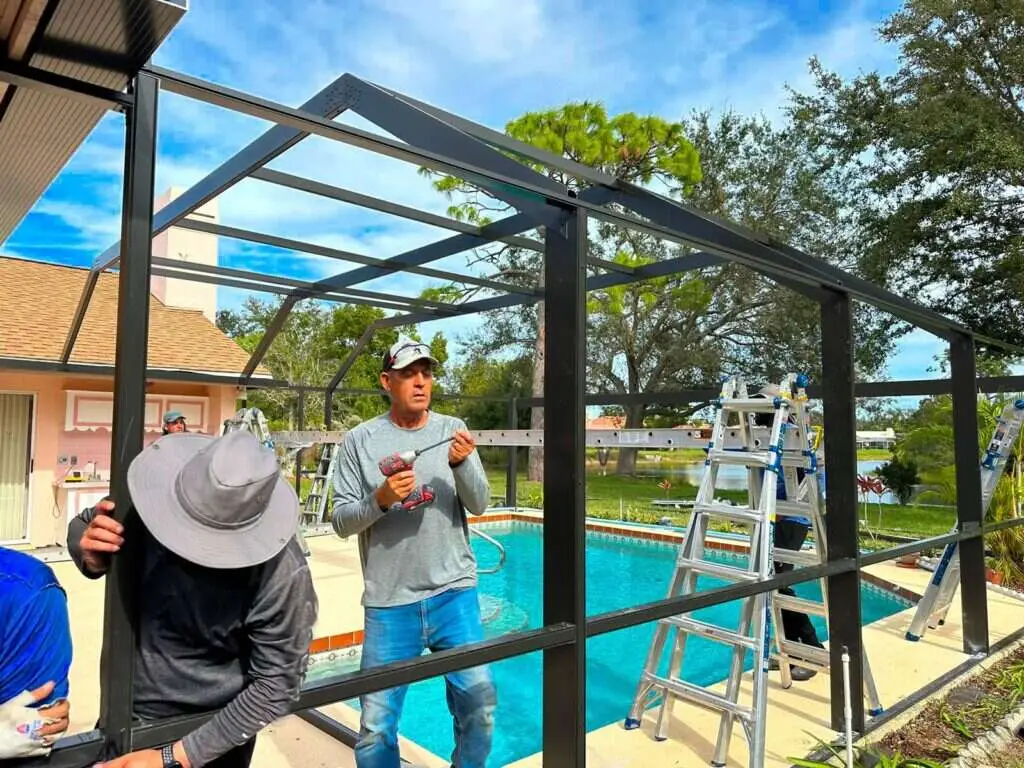
Full repainting, rescreening an entire pool enclosure, or adjusting the structural frame are different matters. These jobs involve surface prep chemicals, proper fastener selection for coastal aluminum, and often a permit depending on the scope and your municipality. A licensed contractor familiar with screened in porch and pool cage systems in the Bradenton, Sarasota, and Parrish area will know which repairs are cosmetic and which affect the integrity of the structure.
If more than a few panels need rescreening, if you see rust streaks at fastener points, or if the cage has never been repainted since installation, it is worth getting a written estimate before deciding how to proceed. A short inspection often clarifies whether the job is a weekend fix or a full restoration.
How the work is done, step by step
- Initial walk-through to assess frame condition, screen wear, and paint surface
- Confirm HOA or community requirements for color and material
- Pressure wash to remove oxidation, chalking, and salt residue
- Spot-treat rust and tighten or replace compromised fasteners
- Apply primer and coating rated for exterior aluminum, or rescreen panels as needed
- Final walk-through to check adhesion, screen tension, and cleanup
Most pool cage painting or rescreening projects in the Bradenton area take two to five days depending on size and weather conditions.
Frequently asked questions
Can I change the color of my existing aluminum pool cage?
Yes. Once the aluminum is cleaned, sanded, and primed with a bonding primer made for metal, most frame colors can be changed, including going from mill finish or bronze to white or a custom color. The existing color does not limit your options as long as the aluminum itself is sound.
What screen material holds up best to Florida sun and salt air?
Fiberglass screen is the standard choice for most Bradenton homes because it resists UV breakdown and does not corrode from salt air. For homes closer to the water, or for those wanting a clearer view, polyester-based screens like No-See-Um or SeeThru are also common, though they typically cost more and may need replacing sooner.
Do I need HOA approval to repaint or rescreen my enclosure?
Many Bradenton communities and deed-restricted neighborhoods require approval before changing the color of a pool cage, even if the screen type stays the same. We can provide color samples and spec sheets to submit with your HOA application, and timelines vary by community so it is worth checking early in the planning process.
How long does it take to repaint or rescreen a typical pool cage?
A standard repaint usually takes 2 to 4 days depending on size and weather, since aluminum needs to be clean and dry before primer and paint go on. Rescreening alone often takes 1 to 3 days, and combined projects typically run 3 to 6 days, with Florida rain and humidity sometimes adding time.
Can a screened in porch be converted into a sunroom or patio enclosure?
In many cases a screened in porch or patio screen enclosure can be modified with vinyl panels or acrylic windows to function more like a sunroom, extending its use into cooler or buggier months. This depends on the existing frame's structure and local permitting, so an on-site look is needed before giving a firm answer.
Will rescreening affect the structural warranty on my existing cage?
Rescreening does not typically affect the structural integrity of a properly engineered aluminum cage, since the screen panels are not load-bearing components. Any warranty tied to the original installer or manufacturer should be checked directly with them, as terms vary by builder and by county.
Nearby Areas We Also Serve
The company serves homeowners throughout the greater Bradenton area and surrounding Gulf Coast communities. Bradenton, Sarasota, Tampa, Naples, Fort Myers and Cape Coral.
Statewide details, colors and the full process are on our main pool cage painting page.
Recent Work

Get a written estimate for your pool cage
Send a few photos of your enclosure along with your address, and you will receive a written estimate back with no cost or obligation. Reach out through the form on this page or call (941) 320-2858 to get started.
Last reviewed: October 17, 2026