
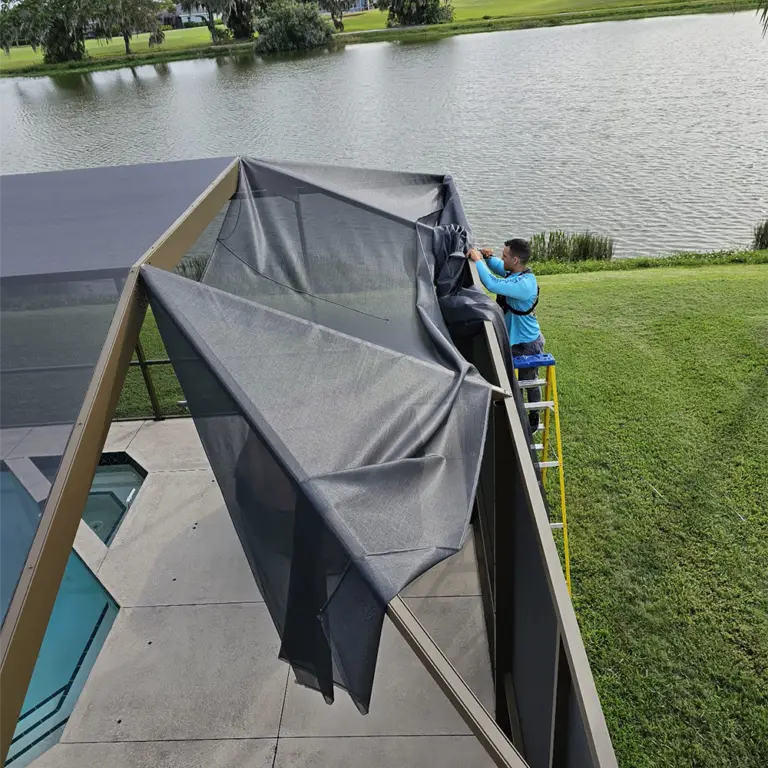

Homeowners asking how much does it cost to rescreen a pool enclosure are usually comparing a few variables: mesh type, the number of screen panels, cage height, and how much of the aluminum framing needs repair before new screen goes in. A single-story cage with standard fiberglass mesh is a different job than a two-story enclosure with pet-resistant or clear view screen, and panel count changes with the size and shape of the lanai.
The average cost to rescreen a pool cage in this area also depends on access. Crews working around pavers, landscaping, grills, and pool furniture need more time than an open yard allows. Salt air and humidity along the Gulf side of Hernando County also shorten screen life, which is why some sections may need replacing sooner than others. A written estimate after an on-site look is the only accurate way to price a specific cage.
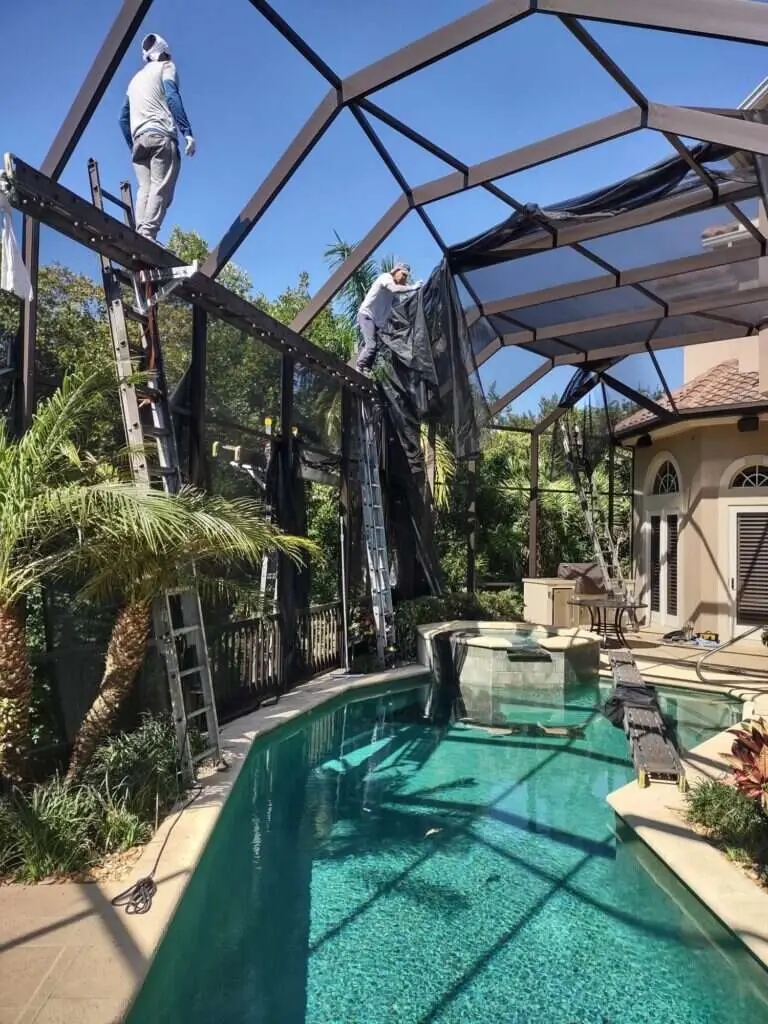
Standard fiberglass screen is the common choice for pool cages in this climate, offering a balance of airflow and insect control at a reasonable price point. Homeowners with pets or higher wind exposure sometimes choose pet-resistant or heavier-gauge mesh for specific panels, such as lower sections near doors. No-see-um mesh is available for finer insect control but reduces airflow slightly, which matters during Florida's humid summer months.
Many Spring Hill communities and deed-restricted neighborhoods have guidelines on screen color, mesh type, or cage appearance, so it is worth checking HOA documents before rescreening. Crews serving the area are familiar with common requirements in Hernando County communities and can work within them. Scheduling also accounts for Florida's rainy season; rescreening is paused during active storms but otherwise proceeds in most weather, with full jobs typically completed within one to a few days depending on cage size.
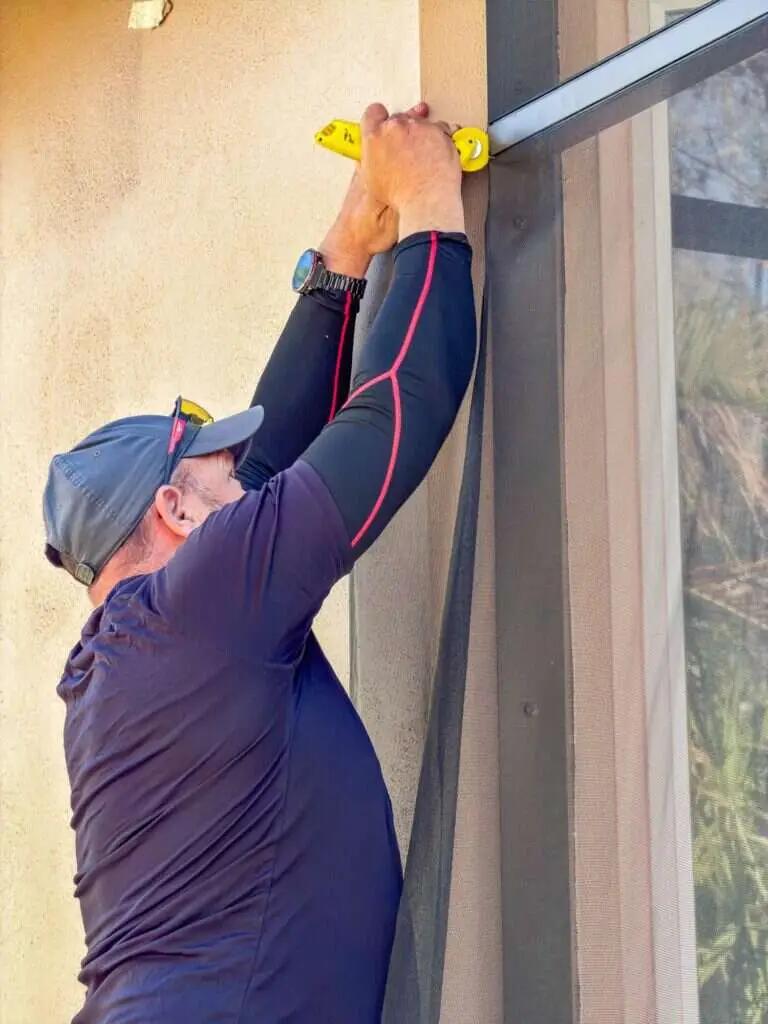
For general screen repair and patching rather than a full rescreen, see our main pool screen repair page. See our main Pool Cage Rescreening page.
Cost depends on cage size, mesh type, panel count, and the condition of the existing frame, so a free written estimate after an on-site visit gives the most accurate figure.
Patching a few torn panels is less expensive than a full rescreen, but if multiple sections are brittle or faded from UV exposure, a complete rescreen often makes more sense long term.
Some Spring Hill communities require approval for mesh color or type, so it is a good idea to review HOA guidelines before scheduling the work.
Homeowners asking how much does it cost to rescreen a pool enclosure are usually comparing a few variables: mesh type, the number of screen panels, cage height, and how much of the aluminum framing needs repair before new screen goes in. A single-story cage with standard fiberglass mesh is a different job than a two-story enclosure with pet-resistant or clear view screen, and panel count changes with the size and shape of the lanai.
The average cost to rescreen a pool cage in this area also depends on access. Crews working around pavers, landscaping, grills, and pool furniture need more time than an open yard allows. Salt air and humidity along the Gulf side of Hernando County also shorten screen life, which is why some sections may need replacing sooner than others. A written estimate after an on-site look is the only accurate way to price a specific cage.
Standard fiberglass screen is the common choice for pool cages in this climate, offering a balance of airflow and insect control at a reasonable price point. Homeowners with pets or higher wind exposure sometimes choose pet-resistant or heavier-gauge mesh for specific panels, such as lower sections near doors. No-see-um mesh is available for finer insect control but reduces airflow slightly, which matters during Florida's humid summer months.
Many Spring Hill communities and deed-restricted neighborhoods have guidelines on screen color, mesh type, or cage appearance, so it is worth checking HOA documents before rescreening. Crews serving the area are familiar with common requirements in Hernando County communities and can work within them. Scheduling also accounts for Florida's rainy season; rescreening is paused during active storms but otherwise proceeds in most weather, with full jobs typically completed within one to a few days depending on cage size.
For general screen repair and patching rather than a full rescreen, see our main pool screen repair page. See our main Pool Cage Rescreening page.
Cost depends on cage size, mesh type, panel count, and the condition of the existing frame, so a free written estimate after an on-site visit gives the most accurate figure.
Patching a few torn panels is less expensive than a full rescreen, but if multiple sections are brittle or faded from UV exposure, a complete rescreen often makes more sense long term.
Some Spring Hill communities require approval for mesh color or type, so it is a good idea to review HOA guidelines before scheduling the work.
Straightforward answers for Florida homeowners planning pool cage, screen, painting, or enclosure work.
The best material depends on visibility, insects, pets, privacy, wind exposure, and expected service life. Fiberglass mesh is a practical standard option, while premium polyester, pet-resistant, privacy, and panoramic screens solve more specific needs.
A few isolated tears can usually be repaired panel by panel. Full pool cage rescreening is often more efficient when many panels are brittle, loose, discolored, or approaching the same age.
Rinse debris regularly, use mild soap and a soft brush, inspect spline and door hardware, and avoid aggressive pressure close to the mesh. Early repairs help prevent small openings from becoming larger failures.
Tell us about your enclosure, screen, painting, restoration, or construction project. Our Florida team will follow up promptly.