
Pool Cage Rescreening in Polk County, FL
We rescreen pool cages for homeowners throughout Polk County, replacing torn or sun-worn panels with screen matched to your home and climate.
- Free Written Estimate
- Fast Scheduling
- Built for Florida Weather
- Licensed & Insured
- BBB A+ Rated
- 150,000+ Customers Served
- 283+ 5-Star Reviews
Request Your Free Estimate
Request a free written estimate for your Polk County pool cage.
- Free No-Obligation Estimate
- Fast Response Times
- No Pressure Consultation
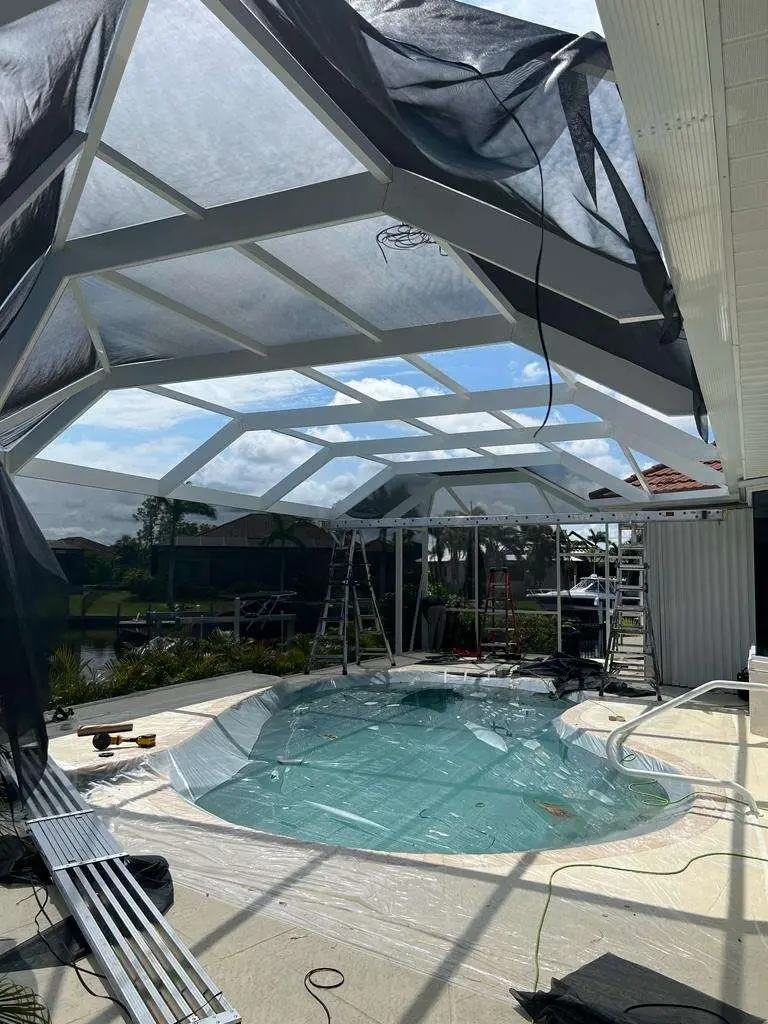
Polk County sits inland in Central Florida, which means pool cages here take a different kind of weathering than coastal enclosures. Summer thunderstorms roll through almost daily from June through September, and the combination of intense UV exposure and wind-driven rain breaks down screen fibers faster than most homeowners expect. Lakeland, Winter Haven, and Auburndale properties in particular see this wear on south- and west-facing panels first.
We have worked on cages across Polk County, from older ranch homes in Bartow and Lake Wales with original 1980s screen to newer construction in Lakeland Highlands and Highland City. Our crews assess panel condition, frame integrity, and fastener wear before quoting the job, then rescreen using materials suited to the home’s sun exposure and the owner’s preference for visibility or shade.
Sun, Storms, and Screen Wear Countywide
By late summer, screens that looked fine in spring often show pinholes, brittleness, or sagging along the spline track. Fiberglass mesh handles Polk County’s UV load better than older screen material, and most of the rescreens we quote involve replacing a mix of sun-damaged panels along the roofline with a few storm-torn sections lower down.
Homes in Haines City, Bartow, and Lake Wales tend to sit on more open lots, where afternoon wind gusts put extra strain on screen panels and frame corners. In denser subdivisions around Lakeland Highlands, Highland City, and Medulla, mature tree canopy adds a different problem: falling branches and debris that tear screens even when the mesh itself is still within its expected lifespan.
Pool cages near Fuller Heights and other older Polk County neighborhoods sometimes still have aluminum frames and spline channels that have shifted slightly over the years. Before we order material, we check whether the existing channel is in good enough condition to hold new spline, since a rescreen only lasts as long as the frame underneath it.
How We Rescreen a Pool Cage
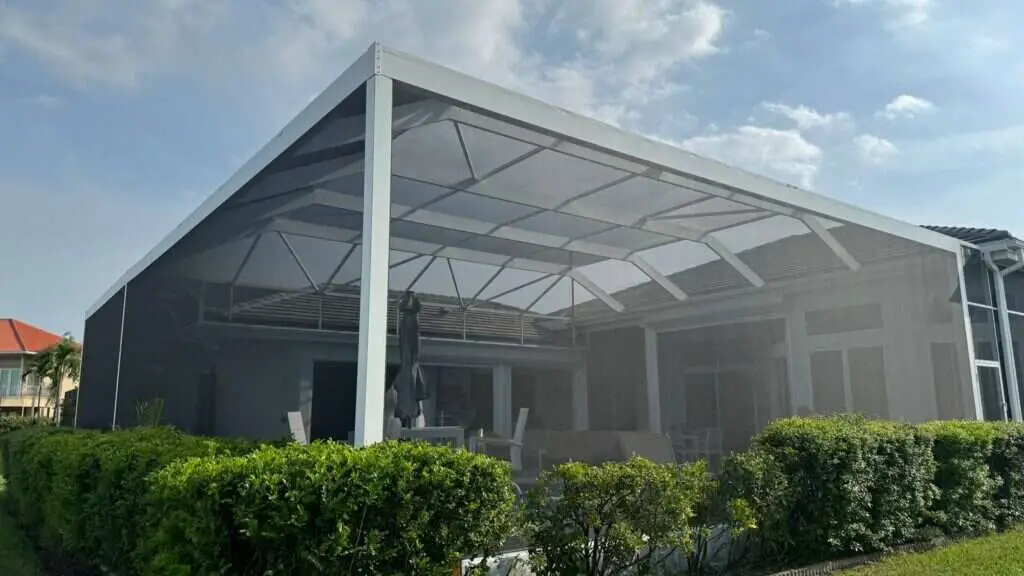
Rescreening starts with removing the damaged panels and inspecting the aluminum frame and spline channel for corrosion, warping, or loose fasteners. We note any sections that need frame repair before new screen goes in, since installing fresh material over a bent or pitted channel shortens its usable life regardless of mesh quality.
Once the frame checks out, we cut panels to size, stretch the mesh taut, and roll new spline into the channel to lock it in place. We trim excess material cleanly along each edge and check door and corner tension before moving to the next panel, working section by section across the cage.
Cleanup includes clearing old screen scraps and spline debris from the pool deck and surrounding area. On larger Polk County properties, especially homes with extended lanais or pool cages attached to screened porches, we schedule the work in stages so the pool area stays usable between visits when possible.
- Frame and spline channel inspection before any material is ordered
- Panel-by-panel removal and replacement to limit disruption
- Fiberglass or aluminum mesh options reviewed during the free written estimate
- Tension and corner checks on each new panel before final trim
- Full cleanup of screen debris and spline clippings from the deck
Scheduling, Access, and HOA Rules
Most rescreening jobs in Polk County take one to two days per cage, depending on panel count and whether frame repairs are needed alongside the screen work. Crews route jobs across the county by area, often grouping a project in Lakeland or Lakeland Highlands with others nearby in Highland City or Medulla the same week, which keeps estimates efficient without rushing the actual work.
Access matters more than people expect. Gated communities in Winter Haven or Haines City may require advance notice to the gate or a work permit from the HOA office, and some deed-restricted neighborhoods in Auburndale and Bartow limit screen color to specific shades like charcoal or gray to match roofline standards. We confirm these details before scheduling so the crew arrives with the right material and no delay at the gate.
Lake Wales and other older platted subdivisions sometimes have narrower side yards, which affects how panels are carried in and whether ladders can be set safely against the frame. None of this changes the quality of the work, but it does change how a route is planned for that day.
- Typical job length: one to two days per cage, weather permitting
- HOA or deed restriction checks done before the estimate is finalized
- Screen color options reviewed against community guidelines when applicable
- Gate access and work-hour windows confirmed in advance for gated communities
Mistakes That Shorten Screen Life
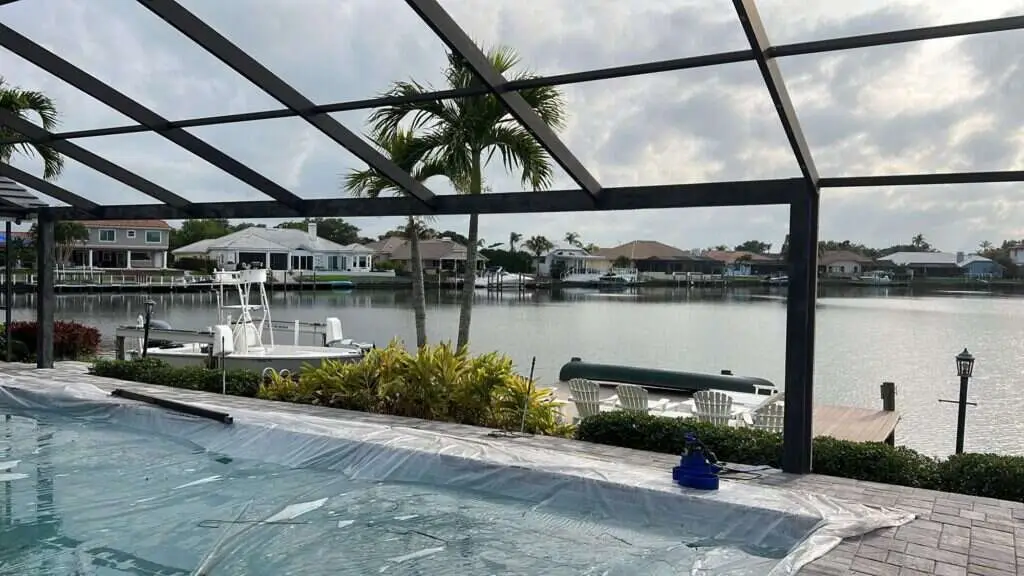
The most common error is using a screen gauge too light for the panel size or local wind exposure. Thin fiberglass mesh installed on a large panel facing open ground in areas like Fuller Heights or outer Haines City will sag and tear years before a heavier gauge would, especially once afternoon storm gusts become a regular pattern through summer.
Another frequent problem is rescreening over a frame that already has corrosion starting at the spline channel or a joint. New screen stretched over a weak channel will not hold tension properly, and the panel can pop loose within a season. We check every channel and corner during inspection, not just the screen surface, because skipping that step is the single biggest reason homeowners end up paying for the same repair twice.
- Using a mesh gauge too light for the panel size or wind exposure
- Rescreening over corroded or loose spline channel without repair first
- Ignoring frame fasteners that have loosened from thermal expansion and contraction
- Ignoring minor sag or ripple that signals uneven tension across the panel
Process and Timeline
- Schedule a free on-site estimate and inspect the frame, spline channel, and existing screen condition
- Confirm screen gauge, color, and any HOA or community requirements before ordering material
- Remove damaged panels and clean the frame and channel of debris and corrosion
- Install new screen with proper spline tension, panel by panel, checking each for even stretch
- Walk the completed cage with the homeowner to confirm fit, appearance, and any touch-up needed
Most Polk County rescreening projects are completed in one to two days, though larger cages or combined frame repairs can take longer.
Communities We Serve in Polk County
Pool Cage Rescreening throughout Polk County, including Lakeland, Winter Haven, Haines City, Bartow, Lake Wales, Auburndale, Lakeland Highlands, Highland City, Medulla, Fuller Heights, Cypress Gardens, Davenport, Inwood, Willow Oak, Kathleen, Lake Alfred, Crystal Lake, Jan Phyl Village, Combee Settlement, Fussels Corner, Loughman, Dundee, Fort Meade, Wahneta, Alturas, Mulberry, Frostproof, Eagle Lake, Polk City, Grenelefe, Crooked Lake Park, Lake Hamilton, Highland Park, Hillcrest Heights, Bradley, Eaton Park, Nichols.
Polk County Pool Cage Rescreening FAQ
How long does pool cage rescreening take for a typical Polk County home?
Most lanai and pool enclosures take one to three days to rescreen, depending on the size of the cage and the number of panels. Larger two-story cages or enclosures with custom pool deck layouts, common in newer Haines City and Auburndale developments, can take a bit longer.
What screen material holds up best against Central Florida sun and storms?
Charcoal and black fiberglass screen is the most common choice because it resists UV breakdown and handles Polk County's intense summer sun without becoming brittle as quickly as lower-grade mesh. For homes near open fields or lakes where wind-blown debris is common, a heavier no-see-um or pet-resistant mesh is often a better long-term option.
Do you need to be home while the crew rescreens the cage?
No, as long as the crew has access to the pool area and enclosure, most homeowners are not required to stay on site for the full job. We do recommend being reachable by phone in case questions come up about screen color or panel sections.
Will my HOA in communities like Lakeland Highlands or Winter Haven restrict screen color choices?
Many Polk County HOAs and deed-restricted communities do limit screen and frame color to approved shades, usually charcoal, black, or a neutral that matches the home's exterior. It is worth checking your community guidelines before the estimate so we can confirm the material matches what is allowed.
Can you match the existing screen or frame color on an older enclosure?
In most cases yes, we can match or closely match existing frame paint and screen tone, though sun fading on older aluminum sometimes means a slight difference until the whole structure is repainted. We can go over options during the estimate once we see the current condition of the frame.
Do you offer pressure washing along with rescreening to clean the pool deck and frame?
Yes, pressure washing is available as part of the same visit or as a standalone service, and it is a practical add-on since aluminum frames and pool decks in Polk County tend to collect algae and water spots quickly in the humidity.
More Pool Cage Services in Polk County
Beyond rescreening, pressure washing is available for pool decks, cage frames, and surrounding hardscape throughout Polk County. Pressure Washing.
Statewide details, colors and the full process are on our main pool cage rescreening page.
Recent Work
Request a Polk County Estimate
Send a few photos of your pool cage along with the property address in Polk County, and we will put together a written estimate based on the size, screen condition, and frame material. For questions before then, you can reach us at (941) 320-2858.
Last reviewed: October 27, 2026