
Pool Cage Rescreening in Volusia County
We rescreen pool cages and lanais for homeowners throughout Volusia County, matching screen type and panel layout to each home's age and exposure.
- Free Written Estimate
- Fast Scheduling
- Built for Florida Weather
- Licensed & Insured
- BBB A+ Rated
- 150,000+ Customers Served
- 283+ 5-Star Reviews
Request Your Free Estimate
Request a free written rescreening estimate for your Volusia County pool cage.
- Free No-Obligation Estimate
- Fast Response Times
- No Pressure Consultation
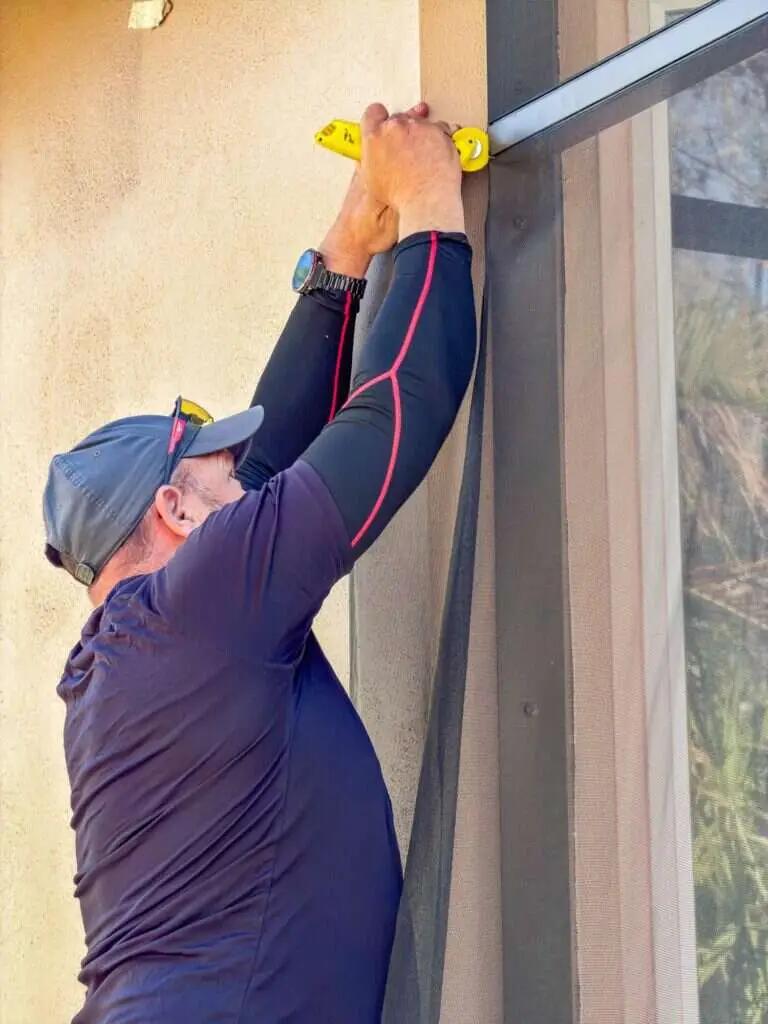
Volusia County stretches from the Atlantic beaches of Daytona Beach and New Smyrna Beach inland to DeLand and Deltona, covering roughly 451,000 residents across a mix of coastal condos, 1980s and 1990s ranch homes, and newer developments near DeBary and Port Orange. Pool cages in this county face a wide range of conditions, from salt-laden air near the coast to heavy summer thunderstorms and intense UV exposure that breaks down screen fibers over time, regardless of distance from the beach.
Screens on homes in Holly Hill, Edgewater, and South Daytona often show the same pattern: brittle fiberglass mesh, pulled spline tracks, and torn panels near doorways from pets or everyday use. We have worked on cages across Volusia County, rescreening with fiberglass or Super Screen mesh depending on the homeowner’s needs, and we schedule crews by route so inland and coastal jobs are handled efficiently in the same week.
Coastal Salt Air vs. Inland Humidity
Cages in Daytona Beach, New Smyrna Beach, and Ormond Beach sit closest to the Atlantic, where salt-laden air accelerates corrosion on screws, spline, and aluminum fasteners. Screens near the coast often show brittleness and discoloration sooner than those further inland, even when the mesh itself still looks intact from a distance.
Inland communities such as DeLand, Deltona, and DeBary deal with a different set of pressures. Thicker tree canopy, standing humidity, and afternoon thunderstorm cycles common to central Volusia encourage mildew growth on screen and framework, and falling branches or acorns cause more small tears and punctures than salt exposure does.
Because of this split, we inspect coastal cages for fastener corrosion and frame pitting first, while inland cages get checked more closely for mildew staining, soft spots in the screen, and storm debris damage. The rescreening approach stays the same, but what we look for during the walkthrough changes with the zip code.
How We Rescreen a Pool Cage
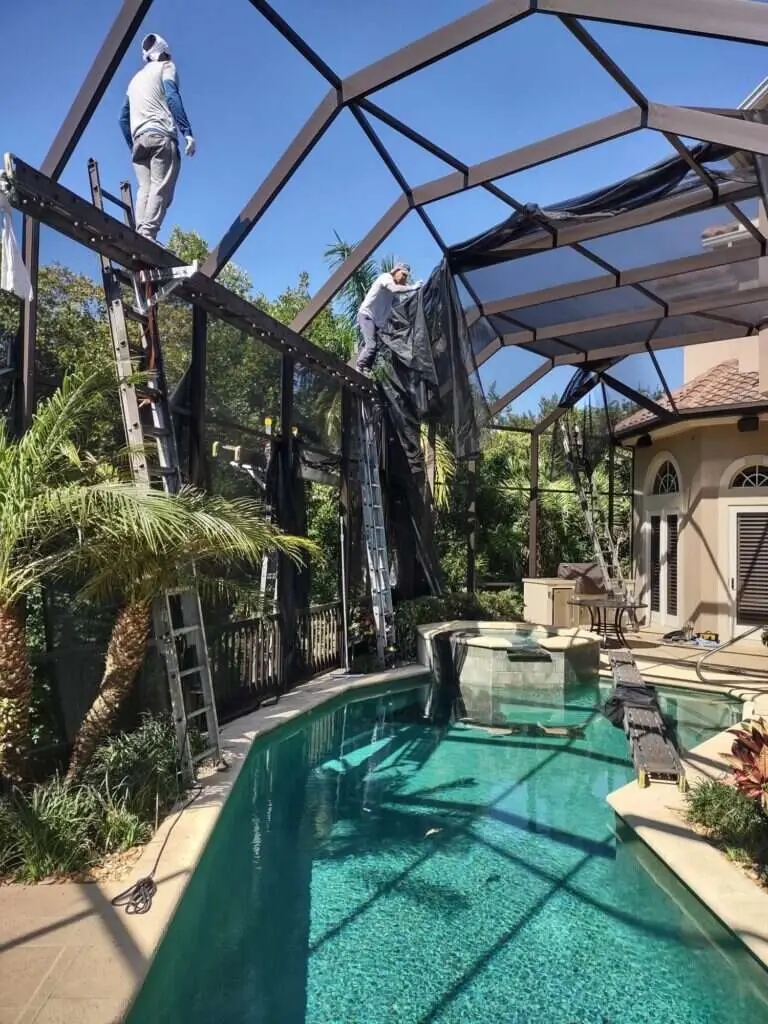
Every rescreening job starts with a panel-by-panel inspection of the cage, checking each screen section for tears, sagging, UV brittleness, and loose or corroded spline channels. We also look at the frame itself, since bent or rusted framing can affect how well new screen will hold once it is installed.
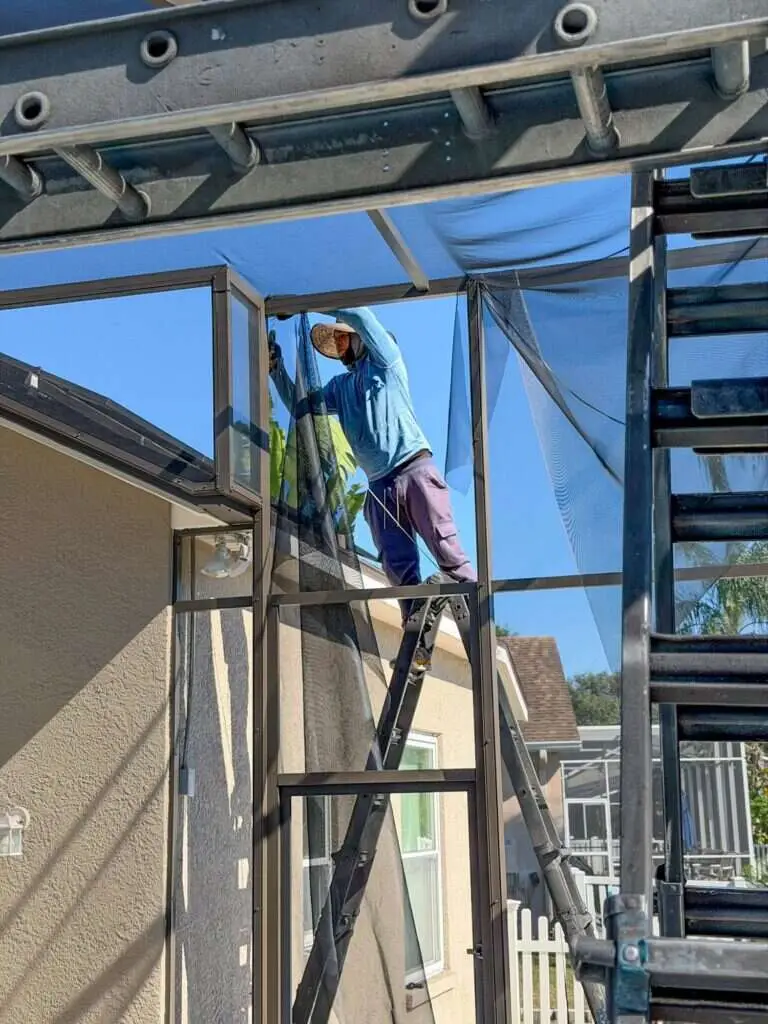
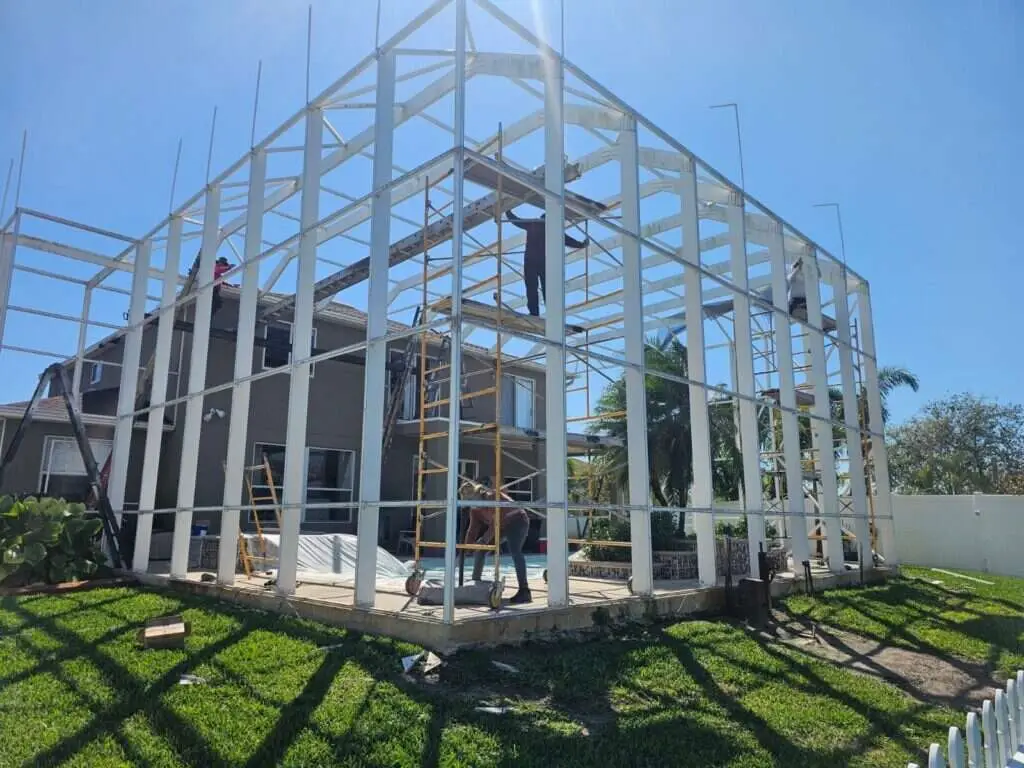
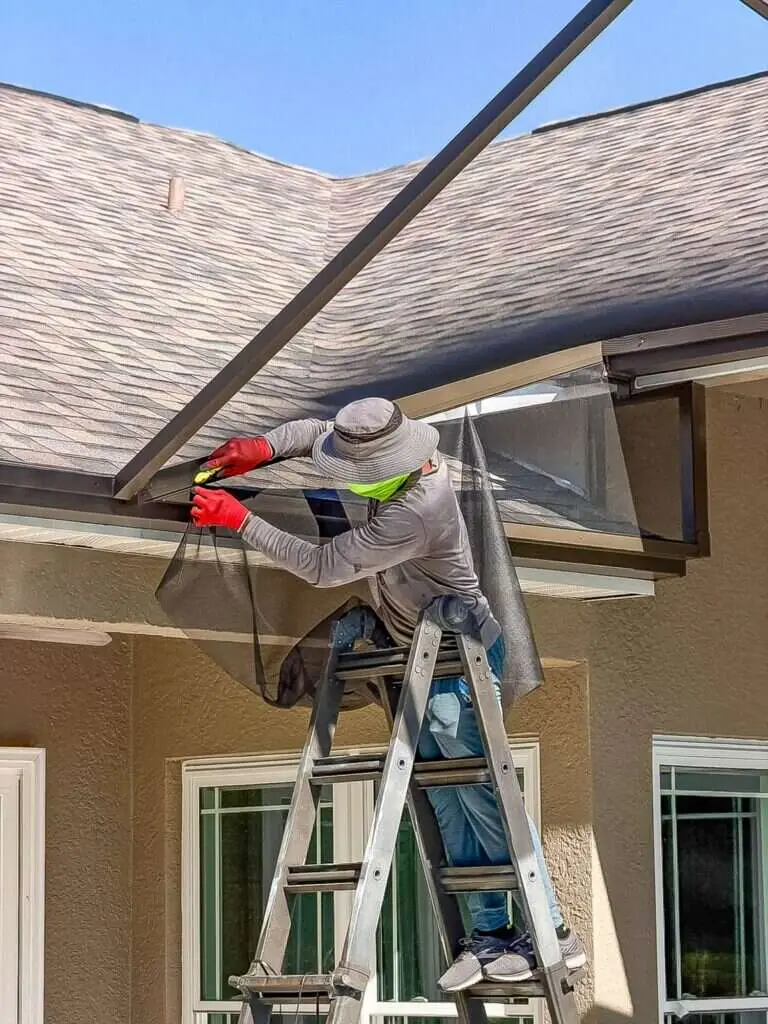
Old screen and spline are removed panel by panel rather than all at once, which keeps the cage structurally supported throughout the job and limits debris scattering into the pool. New mesh is cut to size for each panel, stretched, and secured with fresh spline matched to the existing channel width.
We offer standard and heavier-gauge mesh options depending on the home’s exposure and the owner’s preference, including pet-resistant screen for households with dogs or cats that push against the enclosure. Once rescreening is complete, we clear away old material and debris and do a final walk-through panel by panel.
- Panel-by-panel inspection for tears, sagging, and spline condition
- Careful removal of old screen to limit debris in the pool and yard
- Mesh options including standard, heavy-gauge, and pet-resistant screen
- Fresh spline installed to match each panel’s channel size
- Full cleanup and final inspection before the job is considered done
Scheduling, Access, and HOA Approval
Most Volusia County pool cages can be rescreened in a single day, though larger lanais or cages with multiple pitched panels in communities like Port Orange or DeLand sometimes run into a second day. Crews route appointments by area, grouping jobs across Deltona, DeBary, and South Daytona on the same days to keep estimates accurate and avoid delays caused by driving back and forth across the county.
Access matters more than most homeowners expect. Crews need a clear path through a gate or lanai door wide enough for screen rolls and spline tools, plus the pool and furniture pulled back from the panels being worked. In deed-restricted communities, which are common throughout Volusia County, some HOAs require an approved contractor form or a brief review of screen color and mesh type before work starts, particularly in newer developments around DeBary and parts of Port Orange.
We supply documentation homeowners need for that approval, including material specs and proof of insurance, and we are used to working within community guidelines rather than around them. Gate codes, pet considerations, and preferred work hours are confirmed before the crew arrives, which keeps the job predictable for both the homeowner and any neighbors sharing a fence line or pool deck view.
Why Rescreening Gets Delayed Too Long
The most common mistake is patching one torn panel at a time over several years instead of looking at the whole cage. A patch addresses the hole but not the spline underneath it, which has usually hardened and cracked from UV exposure the same way the rest of the enclosure has. Once spline fails in one section, nearby panels are often close behind.
Ignoring loose or popped screen at the frame track is another one. Screen that is no longer seated in the spline groove flaps in wind, which widens the gap each time, pulls at the mesh fibers, and eventually stresses the aluminum track itself. In coastal wind patterns common to New Smyrna Beach and Edgewater, that movement accelerates fast. What starts as a loose screen panel can turn into a bent frame member if left through a few storm seasons, turning a straightforward rescreen into a repair job that also needs frame work.
- Patching the same panel more than once instead of rescreening it fully
- Leaving popped spline unaddressed, which allows screens to flap and stretch
- Delaying repairs until after hurricane season rather than before it
- Assuming a cage that looks fine from the pool deck has no hidden mesh degradation
Process and Timeline
- Free on-site estimate and panel-by-panel inspection of mesh, spline, and frame condition.
- Mesh type and screen gauge selected based on sun exposure, pet considerations, and view preference.
- Old screening and spline removed from each affected panel down to the bare frame track.
- New screen installed and secured with fresh spline, pulled tight and trimmed clean at each panel.
- Final walkthrough with the homeowner to check tension, seams, and door operation before cleanup.
- Site cleared of old screen debris and spline scraps, with the pool area left ready for use.
Most Volusia County rescreening projects are completed in one to two days depending on cage size and panel count.
Communities We Serve in Volusia County
Pool Cage Rescreening throughout Volusia County, including Deltona, Daytona Beach, Port Orange, Ormond Beach, DeLand, New Smyrna Beach, Edgewater, DeBary, Holly Hill, South Daytona, Orange City, Ormond-by-the-Sea, Daytona Beach Shores, Ponce Inlet, Lake Helen, De Leon Springs, Glencoe, Oak Hill, Pierson, Barberville, Cassadaga, Glenwood, Osteen.
Volusia County Pool Cage Rescreening FAQ
How long does pool cage rescreening take for a typical Volusia County home?
Most full rescreens take one to three days depending on the cage size and panel count, with larger lanai enclosures in communities like Port Orange or Ormond Beach sometimes running closer to a full week. Weather is the main variable, since afternoon storms common to the area can push a project into the next clear day.
What screen material holds up best against salt air near Daytona Beach and New Smyrna Beach?
For homes closer to the Intracoastal or ocean side, a heavier fiberglass screen or a higher-grade mesh resists salt corrosion and UV breakdown better than standard fiberglass. Pet-resistant vinyl-coated polyester is another option worth considering for cages that face both salt exposure and active dogs or cats.
Do you need to remove the whole cage frame to rescreen it, or just the panels?
Rescreening typically only involves removing the spline and old screen material from each panel, leaving the aluminum frame in place. The frame only comes down in sections if there is structural damage, bent supports, or an area that needs rebuilding before new screen can be installed.
Will my HOA in communities like DeBary or Port Orange require approval before rescreening?
Many Volusia County communities, including some in DeBary, Deltona, and Port Orange, have architectural review rules covering screen color, mesh type, or cage modifications, so it is worth checking your HOA guidelines before work begins. We can provide written estimates and material specs that homeowners can submit for approval if needed.
How do I know if my screens need full replacement versus a patch repair?
A handful of small tears or a single damaged panel can often be patched, but screens that are brittle, faded, pulling from the spline track in multiple areas, or more than a decade old generally call for full rescreening. We inspect the cage in person and note which panels are still sound before recommending either option.
Can rescreening be done if my pool cage has existing frame damage or rust?
Minor surface corrosion or a loose fastener can usually be addressed as part of the rescreening visit, but bent panels, failed welds, or significant rust at the footplates need frame repair first. We flag any structural concerns during the estimate so the frame work and rescreening can be scheduled together.
More Pool Cage Services in Volusia County
Beyond rescreening, we also handle cage painting and pressure washing for Volusia County homeowners looking to refresh the full enclosure. Pool Cage Painting and Pressure Washing.
Nearby Areas We Also Serve
Our crews route through Volusia County on a regular schedule, so homes in the surrounding towns and unincorporated areas nearby are covered on the same trips. St. Lucie County, Indian River County, Orange County and Polk County.
Statewide details, colors and the full process are on our main pool cage rescreening page.
Recent Work
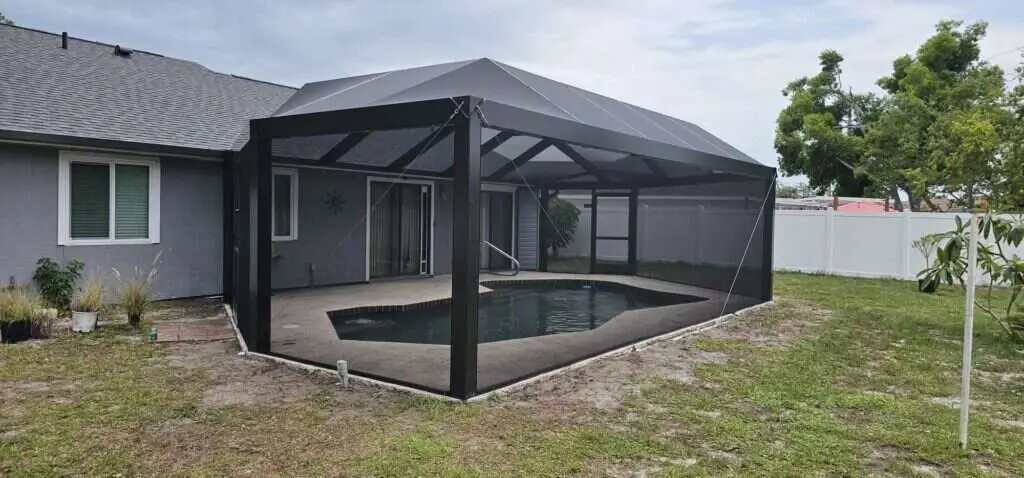
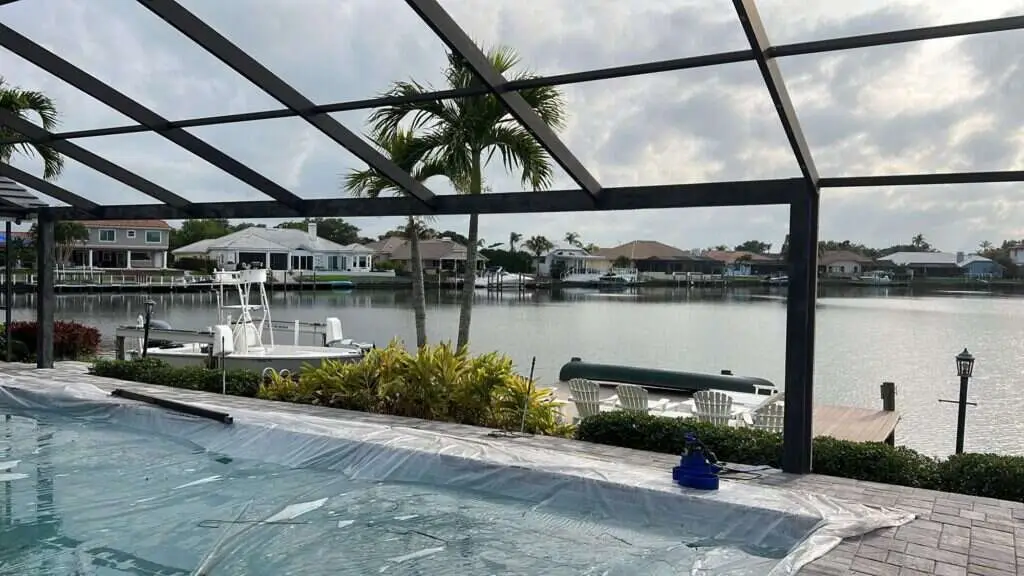
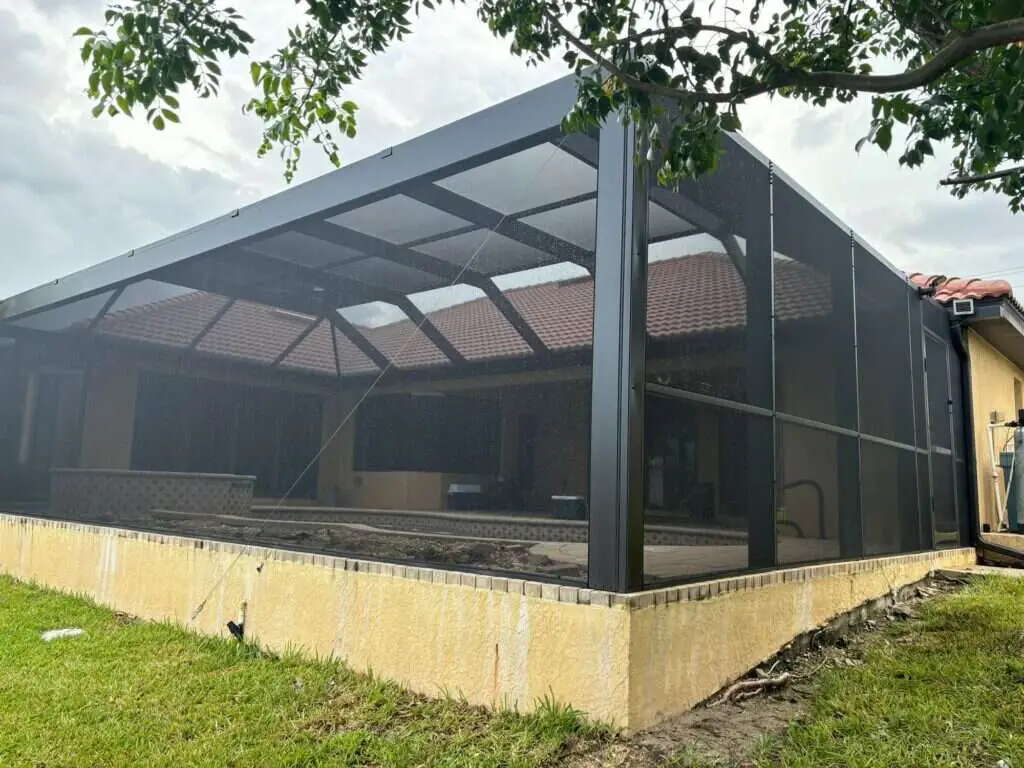
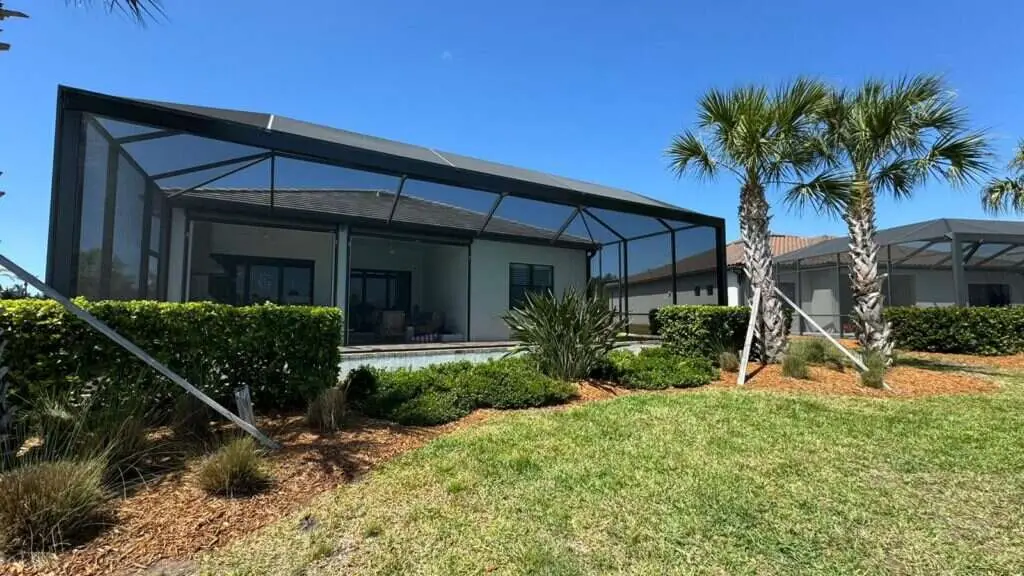
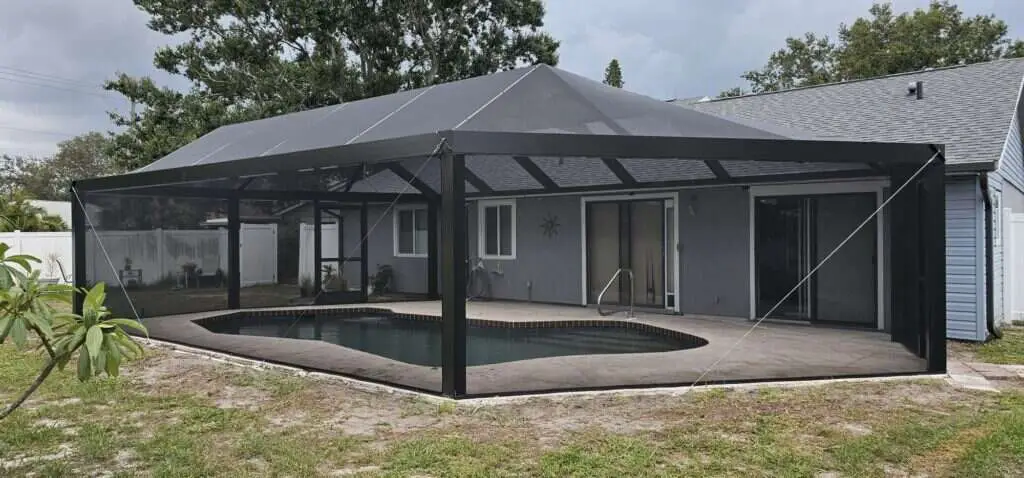
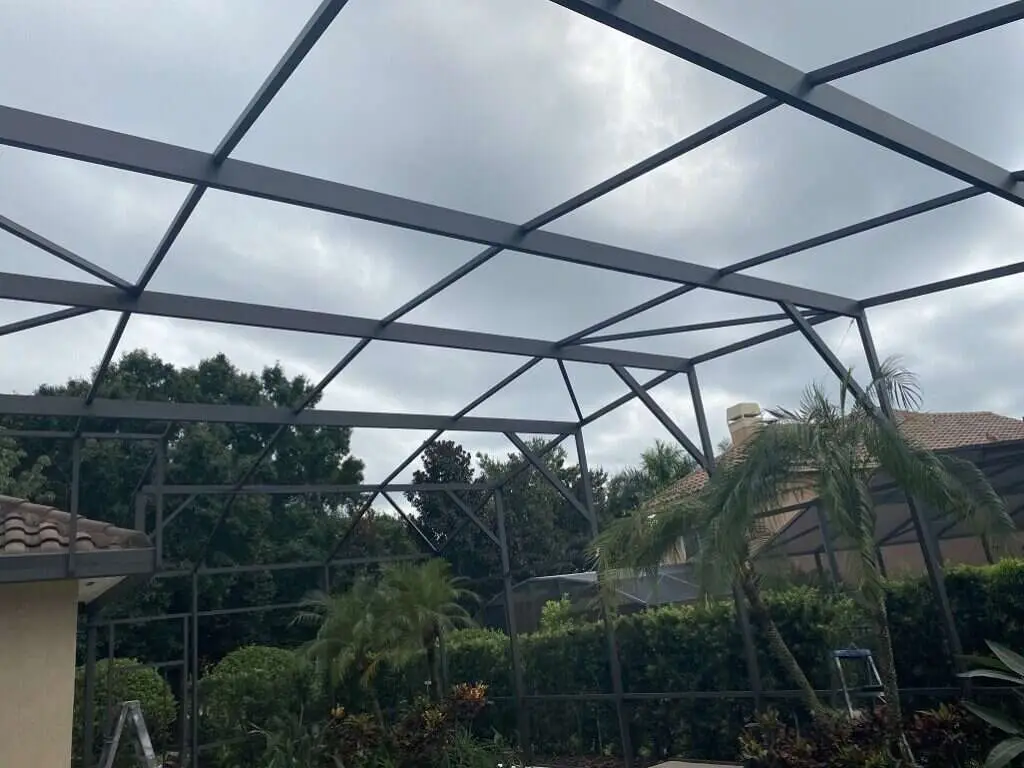
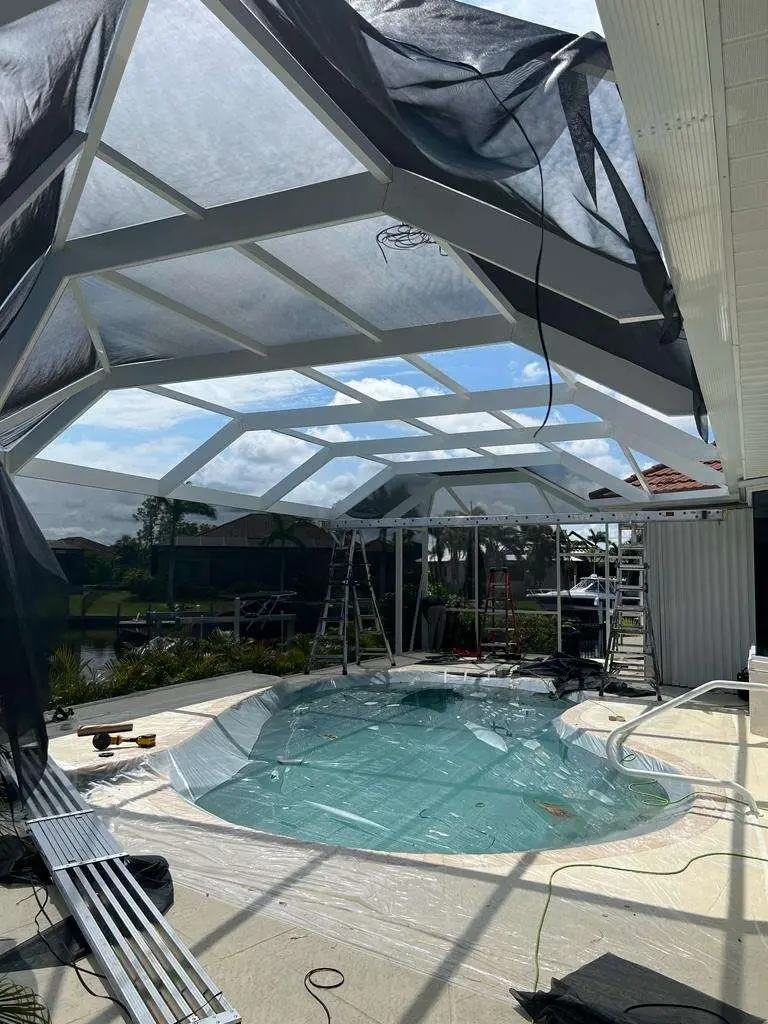
Request a Volusia County Estimate
Send a few photos of your pool cage along with your address in Volusia County, and we will reply with a written estimate for the rescreening work. For questions in the meantime, call or text (941) 320-2858.
Last reviewed: November 7, 2026