
Pool Cage Rescreening in Martin County, FL
We rescreen pool cages and lanais for homeowners throughout Martin County, replacing torn or sun-brittle panels with screening suited to coastal conditions.
- Free Written Estimate
- Fast Scheduling
- Built for Florida Weather
- Licensed & Insured
- BBB A+ Rated
- 150,000+ Customers Served
- 283+ 5-Star Reviews
Request Your Free Estimate
Request a free written estimate for your pool cage rescreening project.
- Free No-Obligation Estimate
- Fast Response Times
- No Pressure Consultation
Martin County runs along Florida’s Atlantic coast, and its roughly 93,000 residents live with a mix of salt air, afternoon storms, and intense UV exposure that steadily breaks down pool screen material. Homes in Sewall’s Point and Jupiter Island sit close enough to open water that salt accumulation on screens and frames is common, while inland communities like Indiantown and Palm City deal more with sun degradation and wind-driven debris tearing panels.
We have worked on cages across Martin County, from older enclosures in North River Shores and Port Salerno to newer construction in Jensen Beach and Stuart. Our crews schedule routes across the county so a rescreening job in Hobe Sound or Ocean Breeze gets the same attention to panel fit, spline quality, and frame condition as one in a gated Palm City community.
Screen Wear Across Martin County Homes
On Jupiter Island and in Sewall’s Point, screens face steady salt drift off the Atlantic and the St. Lucie Inlet. That salt film holds moisture against the mesh, and combined with UV exposure, fiberglass screening in those areas often turns brittle and starts tearing at the corners well before an inland cage would show similar damage.
Inland, around Indiantown and Palm City, the bigger stressors are summer thunderstorm wind loads and tree debris, palm fronds and oak litter that rub against screen panels during storms. Cages there tend to show localized tears and pulled spline rather than the widespread brittleness seen closer to the coast.
Cage age matters as much as location. Older enclosures built with smaller-gauge spline or standard fiberglass mesh generally need full rescreening sooner, while newer frames with heavier screen gauge can sometimes be patched for another season before a full rescreen makes sense.
How We Rescreen a Pool Enclosure
We start by walking the cage and checking the aluminum frame for corrosion, loose fasteners, and bowed panels, since rescreening over a frame problem just shortens the life of the new screen. We also check the spline channel for cracking or UV damage, which is common on cages ten years and older across Martin County.
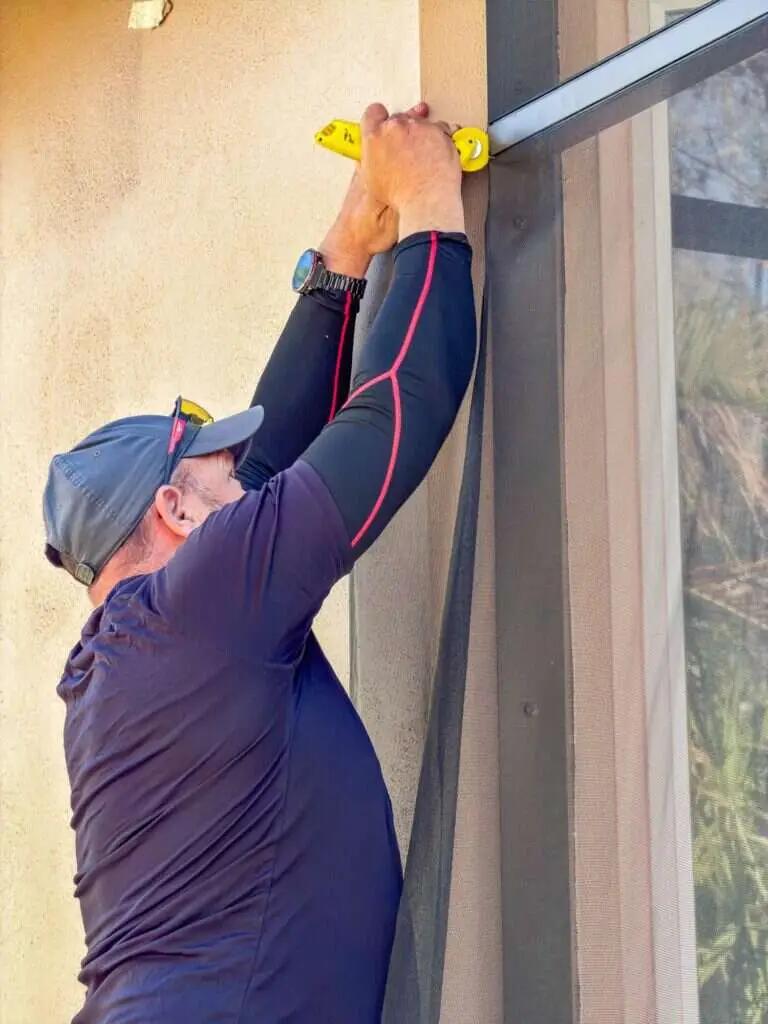
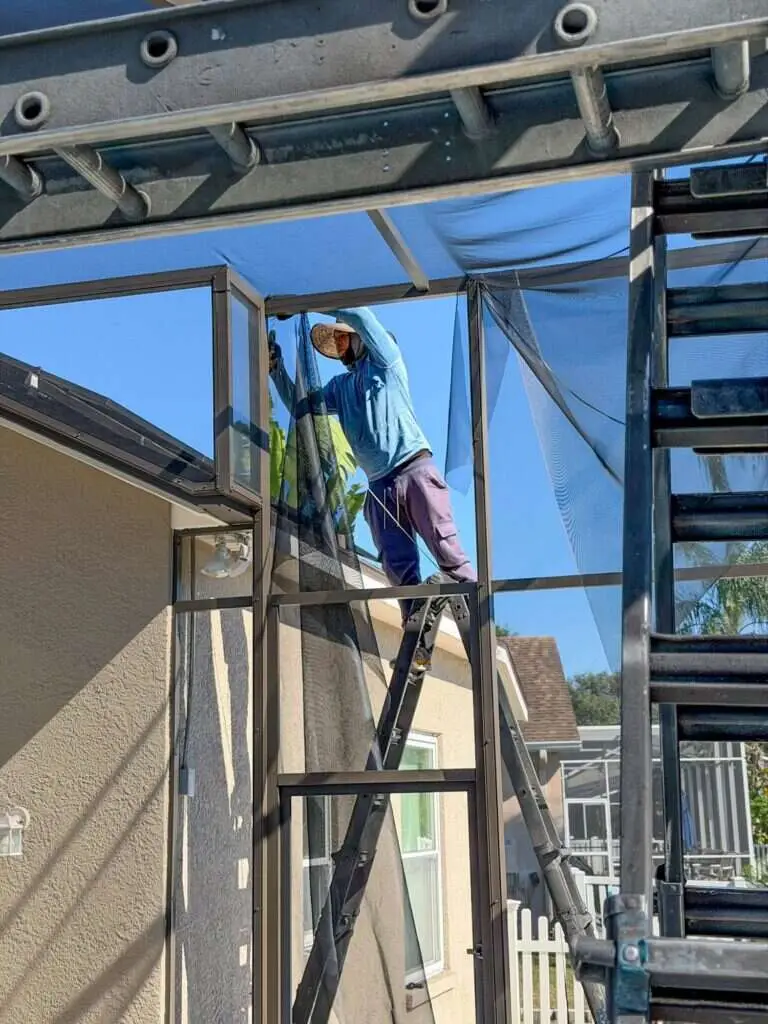
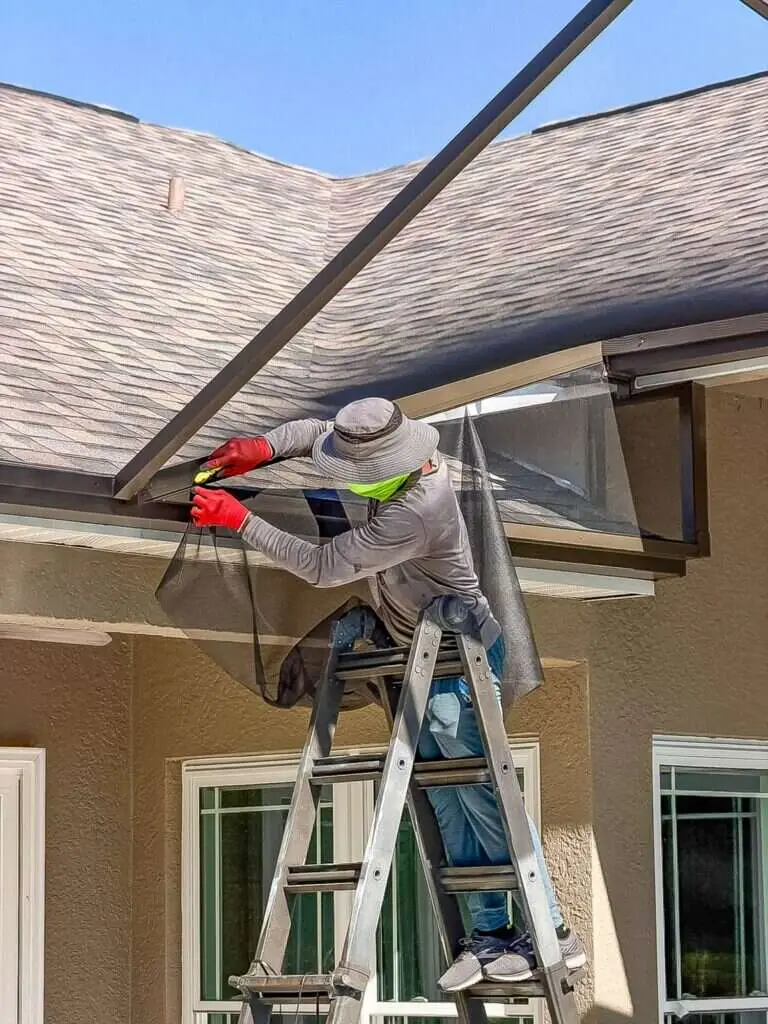
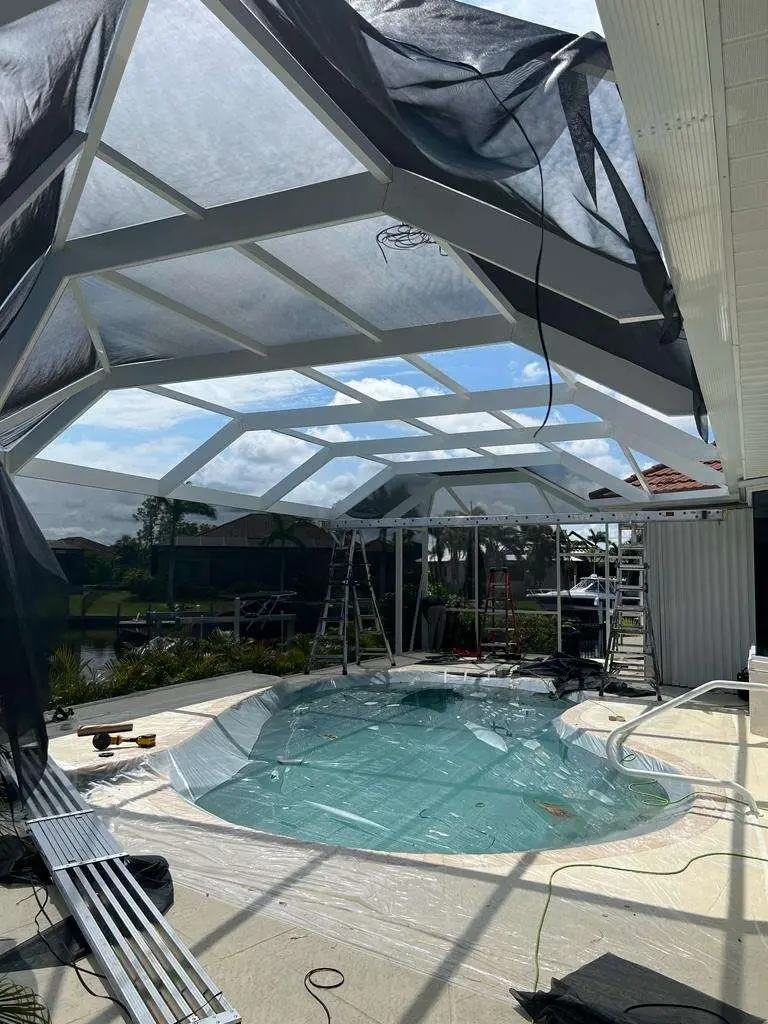
Old screening is cut free and removed panel by panel, and we clean the channels before fitting new material. Homeowners choose between standard fiberglass mesh, solar or no-see-um mesh for added shade and bug control, or pet-resistant screen for households with cats and dogs that push against the panels.
New screen is stretched and secured with fresh spline sized to the channel, then trimmed clean. Most rescreening jobs on a typical lanai or pool cage run one to three days depending on size and mesh choice, and we schedule around HOA notification requirements that apply in some Martin County communities.
- Frame and spline inspection before any screen is removed
- Mesh options: standard fiberglass, solar/no-see-um, pet-resistant
- New spline installed with every rescreened panel
- Typical timeline: one to three days depending on cage size
Scheduling, Access, and HOA Approval
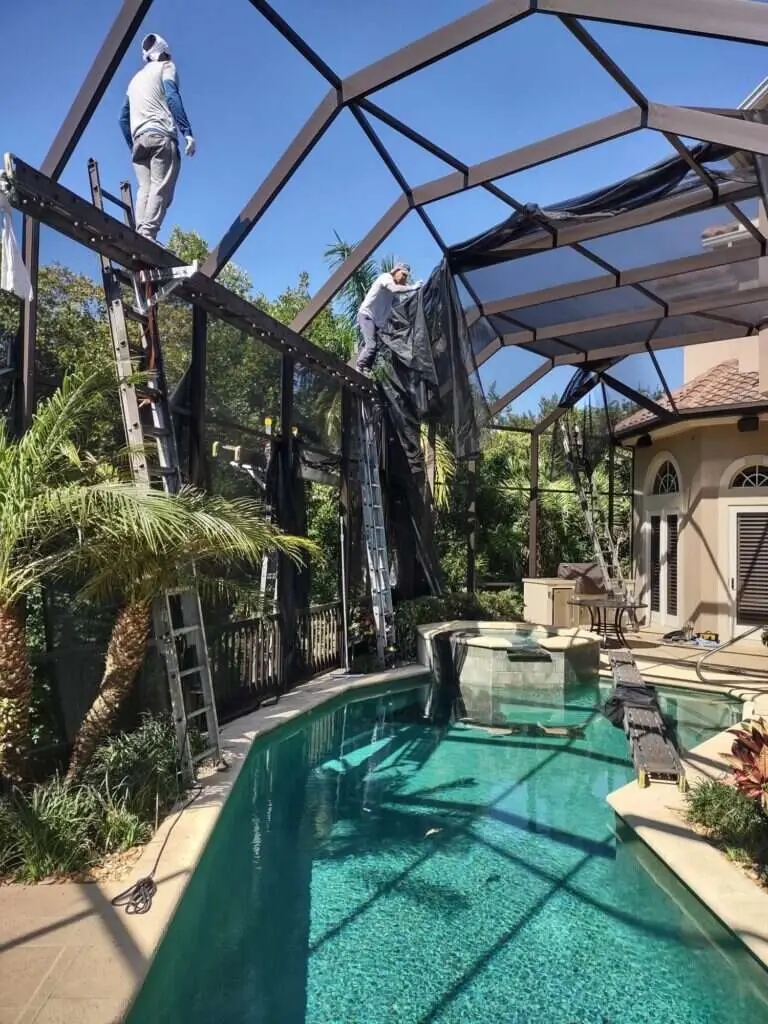
Most rescreening jobs in Martin County run one to three days depending on cage size and panel count, though a full enclosure with multiple access doors can take longer. Crews route through the county by grouping jobs, so a project in Palm City might be scheduled alongside work in Stuart or Port Salerno the same week, which keeps estimates realistic rather than padded.
Gated communities in Palm City, Jensen Beach, and parts of Hobe Sound often require advance notice to gate staff or a visitor code, and some HOAs specify screen color, mesh type, or require written approval before work begins. We ask for the community’s architectural guidelines up front so the estimate reflects what the HOA will actually permit, which avoids delays once material is ordered.
Rain delays are common during Florida’s wet season and summer storm patterns typical of the Treasure Coast. We build flexibility into scheduling rather than rushing a install in standing water or high wind, since spline sets poorly in wet channel and panels can shift if handled in gusty conditions.
- Typical job length: one to three days for a standard pool cage
- Gate codes or advance notice often required in Palm City and Jensen Beach communities
- Some HOAs specify approved mesh color or screen type
- Weather delays are scheduled around, not worked through
- Multiple Martin County jobs are often routed in the same week
Mistakes That Shorten Screen Life
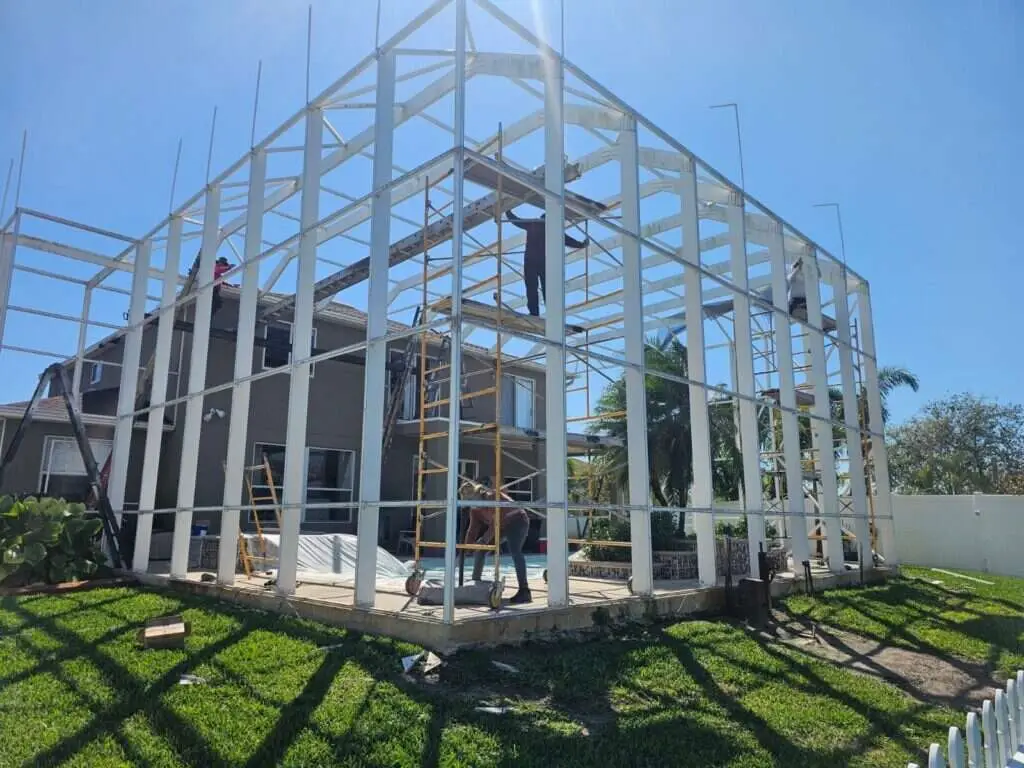
A frequent shortcut is reusing old spline instead of replacing it with new vinyl spline sized to the channel. Worn spline looks fine at installation but hardens and shrinks within a season or two, especially under the UV exposure common across Martin County, which lets panels pop loose early.
Framing problems get missed when a crew focuses only on the screen. A bowed or corroded aluminum rib will keep stressing new mesh at the same points, so a panel can tear again within a year even with fresh material. We check frame condition before quoting rescreening alone versus rescreening paired with minor frame repair.
Mesh choice matters more near the water. Homes in Sewall’s Point, Jupiter Island, and along the Indian River in Jensen Beach face heavier salt exposure than inland properties in Indiantown or Palm City, and a standard fiberglass mesh may degrade faster there than a heavier-gauge or pet-resistant option suited to the exposure.
- Old spline reused instead of replaced with correctly sized new spline
- Bent or corroded framing left unaddressed under new screen
- Same mesh weight used for waterfront and inland homes regardless of exposure
- Panels stretched over uneven frames instead of trimmed to fit
Process and Timeline
- Walk the cage to inspect frame condition, fastener corrosion, and panel fit
- Confirm HOA or community screening specifications where applicable
- Remove damaged screen and old spline from each panel track
- Install new mesh sized to the panel with fresh spline pressed into the channel
- Check doors and high-stress corners for proper tension before final walkthrough
Most Martin County rescreening projects are completed in one to three days, depending on cage size and weather.
Communities We Serve in Martin County
Pool Cage Rescreening throughout Martin County, including Palm City, Stuart, Hobe Sound, Jensen Beach, Port Salerno, Indiantown, North River Shores, Sewall’s Point, Jupiter Island, Ocean Breeze.
Martin County Pool Cage Rescreening FAQ
How long does pool cage rescreening take for a typical Martin County home?
Most residential enclosures take one to three days depending on the size of the cage and the number of panels being replaced. Larger lanais in waterfront communities or homes with a pool and a separate patio screen section can take longer, especially if framing repairs are needed.
Will you match the screen density used in my neighborhood, like Jupiter Island or Hobe Sound?
Yes, screen mesh comes in standard fiberglass density as well as heavier no-see-um mesh, and the crew can match whatever is already installed or switch materials if you want better insect control. Many homes near the Intracoastal choose the tighter weave because of the insect pressure that comes with proximity to water.
Do I need HOA approval before rescreening my enclosure in a gated community?
Many of Martin County's gated and waterfront communities have architectural review committees that want to confirm screen color and frame condition before work starts, so it is worth checking your community's rules. We can provide a written estimate with material specifications that homeowners typically submit for approval.
Can rescreening be done if my pool cage frame has rust or bent panels?
Rescreening can proceed alongside minor frame repair, but significant rust, corroded fasteners, or structurally bent panels usually need to be addressed first so the new screen has something sound to attach to. During the estimate visit we check the frame and note any repair work needed before quoting the rescreening.
How does salt air near Sewall's Point or Jensen Beach affect how often I need to rescreen?
Coastal exposure accelerates the breakdown of screen mesh and the corrosion of fasteners and frame joints, so homes closer to the Intracoastal or the ocean tend to need rescreening sooner than inland properties in places like Palm City or Indiantown. Salt residue combined with UV exposure is the main reason screens near the water turn brittle faster.
Do you work around Florida's rainy season when scheduling rescreening projects?
Rescreening is scheduled around daily rain patterns typical of summer afternoons, with work usually planned for morning hours when the frame and screen are dry. Extended storms or tropical weather can push a project back a few days, and the schedule is adjusted accordingly.
More Pool Cage Services in Martin County
Beyond rescreening, the company also handles pool cage painting and pressure washing for homes throughout Martin County. Pressure Washing and Pool Cage Painting.
Nearby Areas We Also Serve
Crews routing through Martin County also pick up rescreening work in the surrounding Treasure Coast communities along the way. Seminole County, St. Lucie County, Volusia County, Orange County, Indian River County and Polk County.
Statewide details, colors and the full process are on our main pool cage rescreening page.
Recent Work
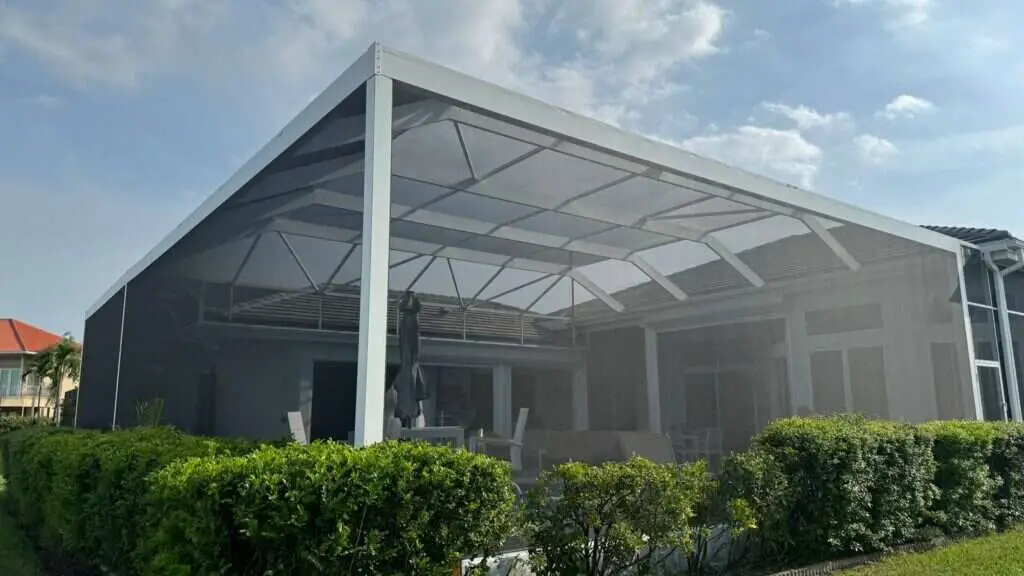
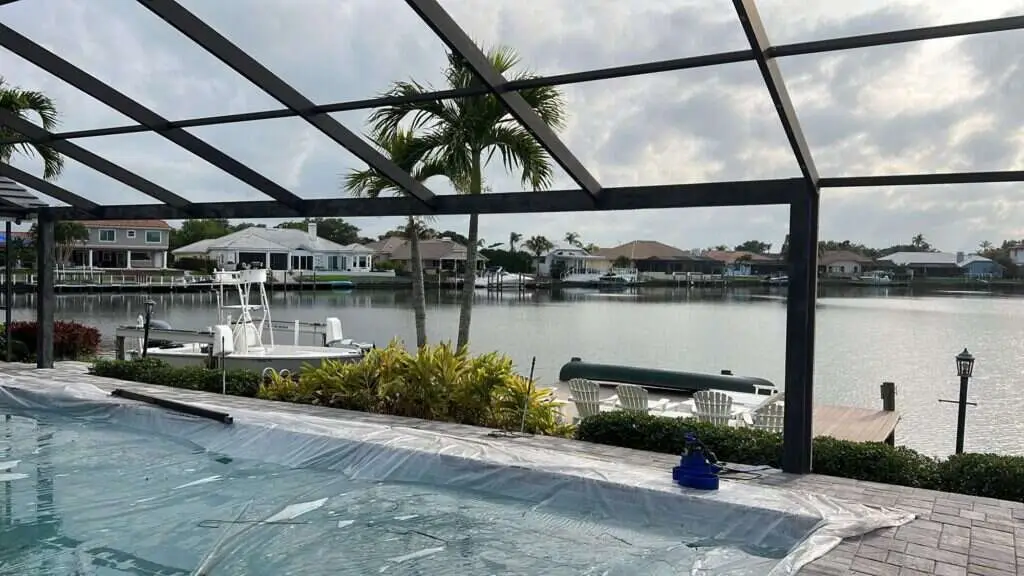
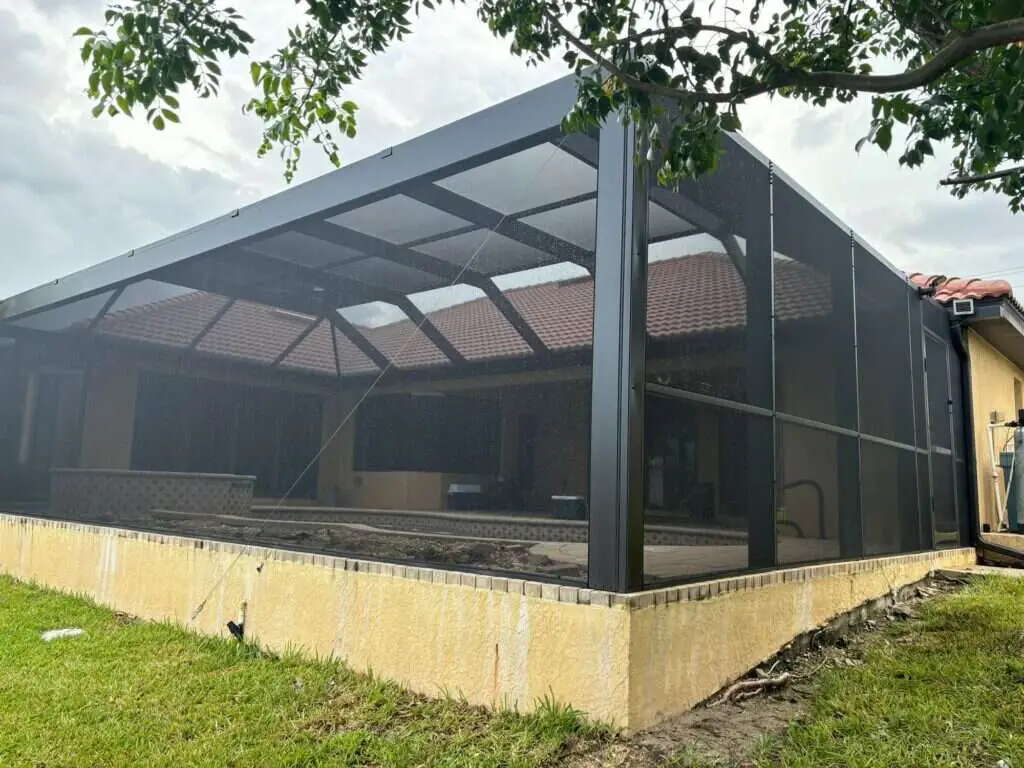
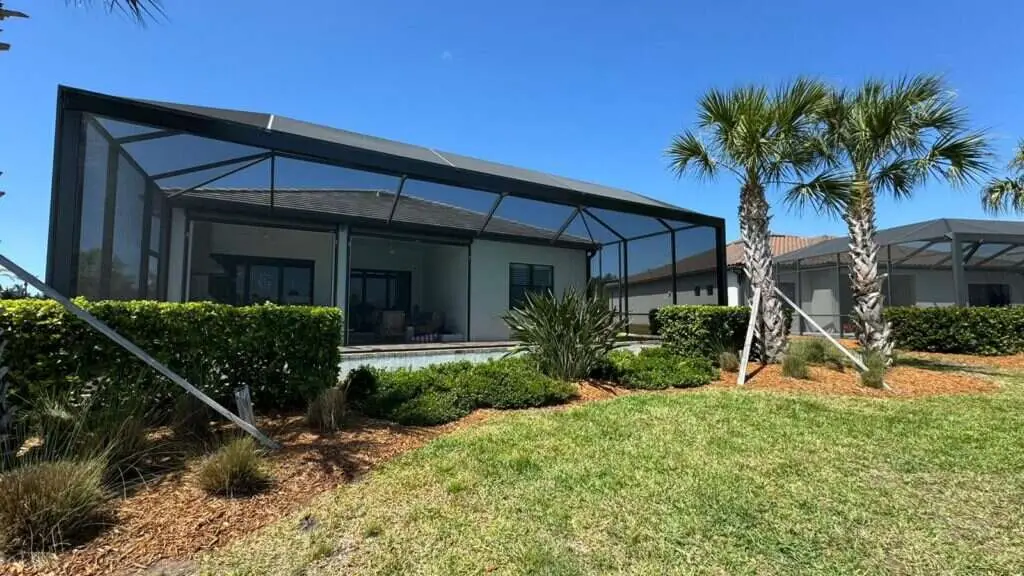
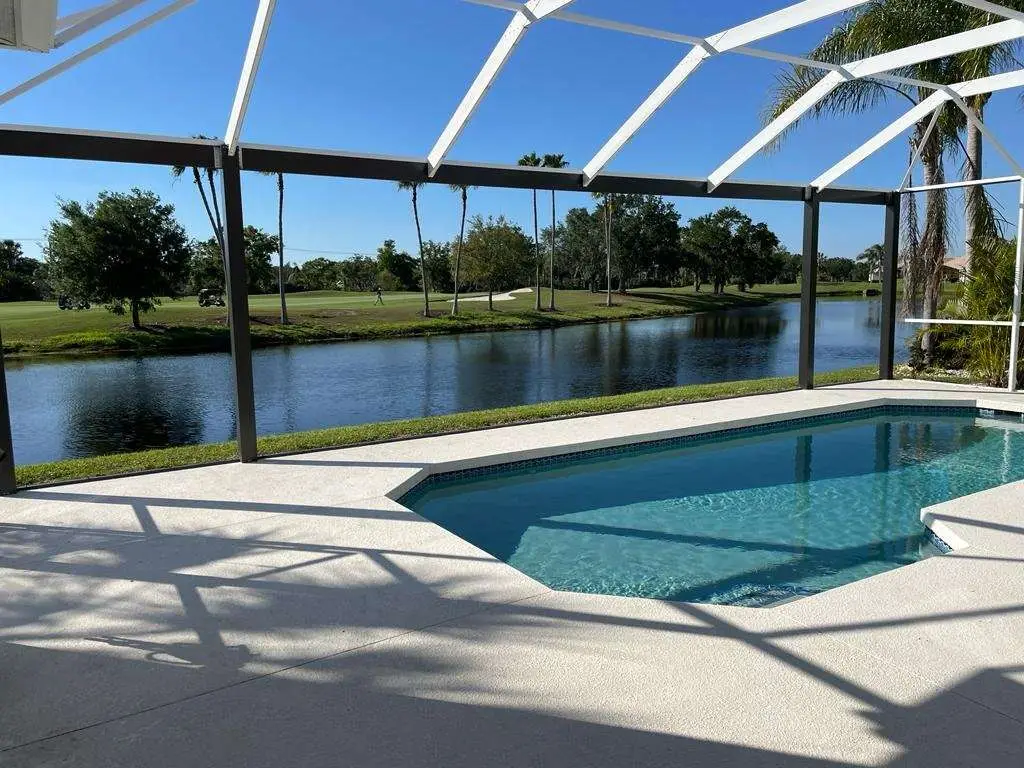
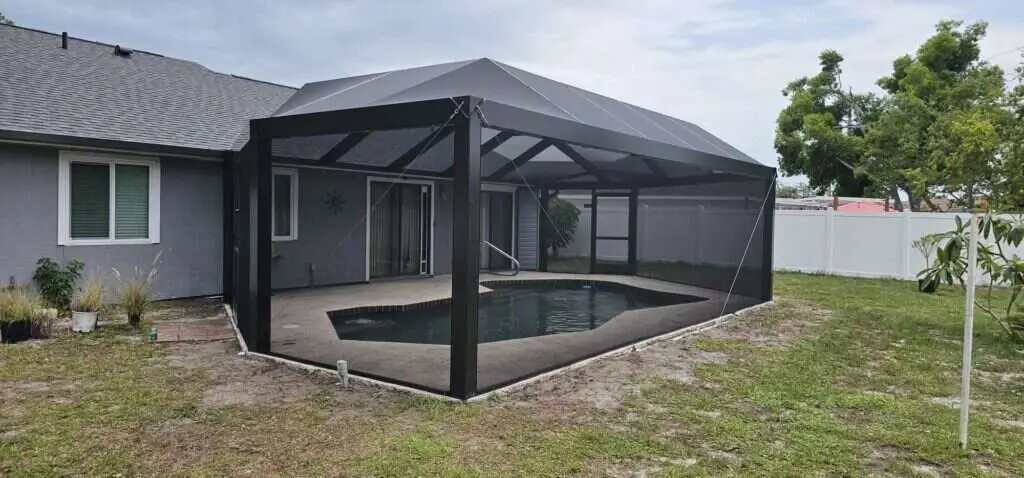
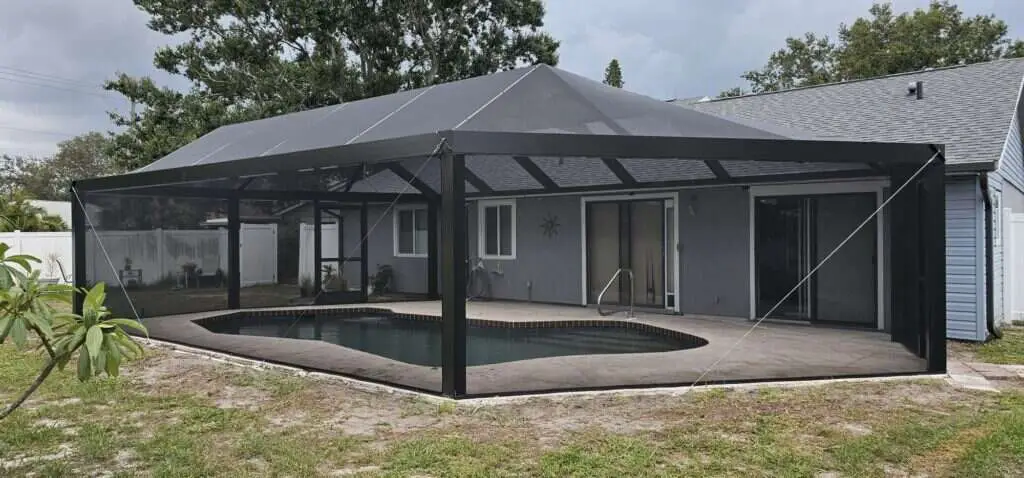
Request a Martin County Estimate
Send a few photos of your pool cage along with the property address in Martin County, and we will put together a written estimate based on the panel count, frame condition, and screen type you need. There is no cost for the estimate, and you can reach us at (941) 320-2858 if you would rather discuss the project by phone.
Last reviewed: November 9, 2026